Home / News & Blog / Abrasive Blog / Market Trends: Demand Shift Toward High-Purity SiC in Refractories
In the global refractory raw materials market, silicon carbide (SiC) has moved from a supplementary material to a core performance-driven component. This transformation is not accidental—it is the result of continuous upgrades in industrial furnace technology, stricter quality requirements in downstream industries, and increasing demand for energy efficiency.
From DOMILL’s long-term observation in abrasive and refractory raw material supply, the most significant change in recent years is not just the growth of SiC consumption, but the clear shift from conventional SiC grades to high-purity silicon carbide materials.
Traditional SiC products, such as standard black silicon carbide, are still widely used in general abrasive and refractory applications. However, in high-end industrial environments, they are gradually being replaced by materials with higher purity, more stable crystal structure, and lower impurity content. This is especially evident in applications where contamination, thermal stability, and material lifespan directly affect production cost and product yield.
High-purity SiC is now regarded as a strategic material in industries such as metallurgy, photovoltaic manufacturing, advanced ceramics, and semiconductor processing. The transition is not only technological, but also closely linked to global trends such as carbon neutrality, industrial automation, and precision manufacturing.
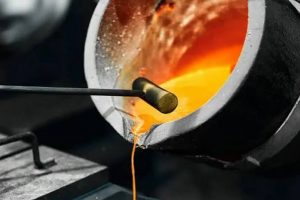
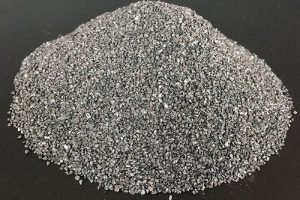
The increasing demand for high-purity silicon carbide in refractories is mainly driven by several interconnected industrial forces.
The first is the continuous expansion of high-temperature industrial processes. Steelmaking, non-ferrous metallurgy, and glass production all rely on furnaces operating at extremely high temperatures. In these environments, conventional refractory materials often face issues such as thermal cracking, chemical corrosion, and rapid wear. High-purity SiC offers significantly improved thermal shock resistance, higher mechanical strength at elevated temperatures, and better resistance to oxidation and slag attack. As a result, it extends the service life of furnace linings and reduces maintenance frequency, which directly lowers operational costs.
The second major driver is the rapid development of the photovoltaic and semiconductor industries. These industries have extremely strict requirements for material purity. Even trace metallic impurities in refractory components can affect silicon wafer quality or crystal growth stability. For this reason, high-purity SiC has become an essential material in wafer processing equipment, kiln furniture, and crystal growth systems. As global demand for renewable energy continues to increase, photovoltaic production capacity is expanding rapidly, which further accelerates the consumption of high-purity SiC-based refractory materials.
The third driver is energy efficiency and environmental regulation. Industrial energy consumption is under increasing scrutiny worldwide. High-purity SiC contributes to energy savings due to its excellent thermal conductivity and heat transfer efficiency. Furnaces using SiC-based refractory components typically achieve better thermal stability and reduced heat loss. At the same time, longer service life means fewer replacements and lower raw material consumption, which aligns with global sustainability goals.
As a company with more than 30 years of experience in abrasive and refractory raw materials, DOMILL Abrasive Technology Co., Ltd. has been closely following the evolution of silicon carbide applications across different industries.
In practical supply experience, we have observed that customer requirements for SiC materials have become significantly more specialized. Instead of simply requesting “silicon carbide,” buyers now focus on detailed parameters such as purity level, particle size distribution, impurity control, and application compatibility.
To meet these evolving requirements, DOMILL provides a structured silicon carbide product system that includes both standard and high-performance grades. Our high-purity silicon carbide materials are designed for demanding industrial applications where consistency and thermal stability are critical. These materials are widely used in refractory bricks, castables, kiln furniture systems, and high-temperature ceramic components.
In addition, DOMILL also supplies green silicon carbide materials, which are known for their higher hardness and purity compared to black silicon carbide. These materials are particularly suitable for precision ceramic applications and advanced industrial processes where surface quality and structural stability are important.
Beyond raw material supply, DOMILL focuses strongly on application-oriented solutions. This means we do not only provide SiC materials as a commodity, but also support customers in optimizing particle size selection, improving batch consistency, and stabilizing production performance. For refractory manufacturers, this is especially important because even small variations in raw material quality can significantly affect final product performance.
High-purity silicon carbide is now widely used across multiple high-temperature industrial sectors, and its application scope continues to expand.
In the metallurgical industry, SiC is commonly used in furnace linings, ladle systems, and slag-resistant refractory components. Its main advantage in this field is its ability to withstand aggressive chemical environments while maintaining structural stability under thermal stress. This significantly improves furnace durability and reduces downtime caused by refractory failure.
In the ceramic and kiln furniture industry, high-purity SiC is used to manufacture kiln shelves, setter plates, and load-bearing structures. These components must maintain dimensional stability during repeated heating and cooling cycles. SiC’s excellent thermal shock resistance ensures long-term performance without deformation or cracking.
In the glass manufacturing industry, material purity is extremely important. Any contamination introduced by refractory materials can affect final glass quality. High-purity SiC is therefore used in furnace linings and critical structural components where low contamination and high thermal resistance are required.
The photovoltaic and semiconductor industries represent the fastest-growing application segment. Silicon wafer production and crystal growth processes require extremely clean thermal environments. High-purity SiC materials are used in wafer sintering trays, crucibles, and furnace fixtures. As global solar energy installation continues to grow, this segment is expected to remain a key driver of SiC demand in the coming years.
In addition, aerospace and advanced engineering applications are gradually adopting SiC-based materials for high-temperature structural components, where both lightweight properties and thermal resistance are required.
The future development of the silicon carbide refractory market is closely tied to continuous improvements in material purity and production technology.
One clear trend is the gradual shift toward higher purity standards. While traditional industrial SiC may meet general refractory requirements, advanced applications are increasingly demanding purity levels above 98–99%, along with strict control over metallic impurities. This requires more advanced purification processes and tighter quality control systems during production.
Another important trend is the development of composite refractory systems. Instead of using SiC as a single material, it is increasingly combined with alumina, carbon, or other ceramic binders to form hybrid refractory structures. These composites provide improved mechanical strength, better thermal performance, and enhanced resistance to chemical corrosion.
Sustainability is also becoming a key factor in material development. Manufacturers are focusing on reducing energy consumption during SiC production, optimizing raw material utilization, and lowering overall carbon emissions. This aligns with global environmental policies and industrial decarbonization goals.
From DOMILL’s perspective, the long-term direction of the market is clear: silicon carbide will continue to move toward higher purity, more stable performance, and more specialized application design.
The demand shift toward high-purity silicon carbide in refractories represents a fundamental transformation in the global high-temperature materials industry. It is driven by the combined forces of industrial upgrading, energy efficiency requirements, and the rapid growth of high-tech manufacturing sectors such as photovoltaics and semiconductors.
For suppliers and manufacturers, this trend means that competition will no longer be based only on price or basic material supply, but increasingly on purity control capability, application engineering support, and long-term supply stability.
From DOMILL’s perspective, high-purity SiC is not just a raw material—it is a key enabler of next-generation industrial performance. By focusing on consistent quality, application-driven development, and customer-specific solutions, DOMILL continues to support global partners in achieving more efficient and reliable refractory systems.