Home / Products / Brown Fused Alumina (BFA) / A7: Refractory Brown Fused Alumina
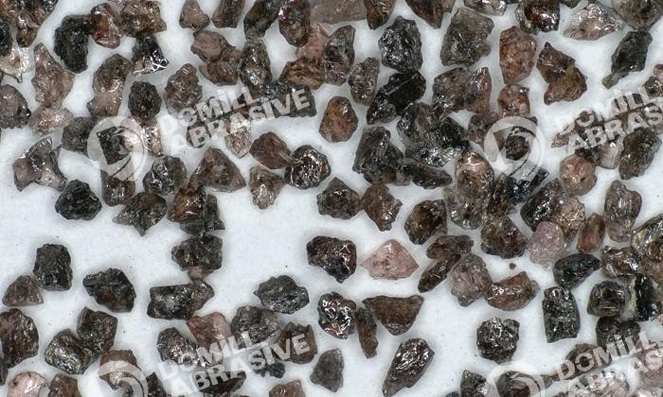
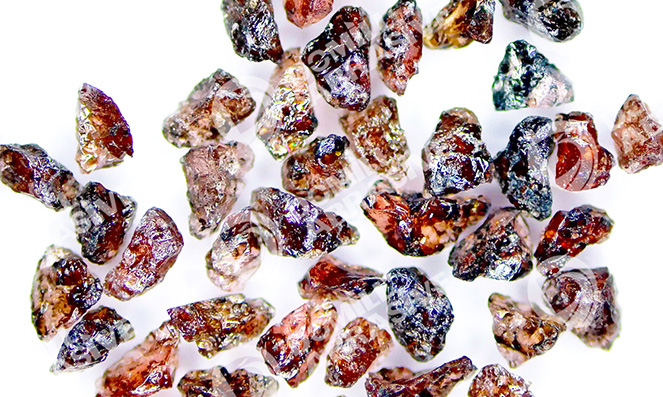
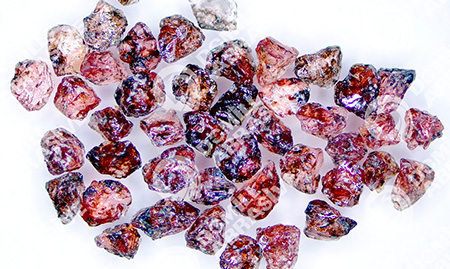
The DOMILL A7 series is our premium refractory-grade matrix engineered specifically for modern industrial kilns, ultra-large-capacity blast furnace iron runners, and severe metallurgical melt containment linings.
Selected from elite tilting furnace clinkers and processed through a proprietary "low-glass-phase enrichment and segregation process," this grade drives volatile silicate glass networks (SiO2) and rogue metallic aggregates down to technical minimums. This highly pure α-Al2O3 crystalline framework shatters the structural limitations of generic commercial sands, which soften or liquefy prematurely under intense thermal loads and reducing atmospheres. It serves as the gold standard for enterprises pursuing extended furnace campaigns and zero volumetric creep.
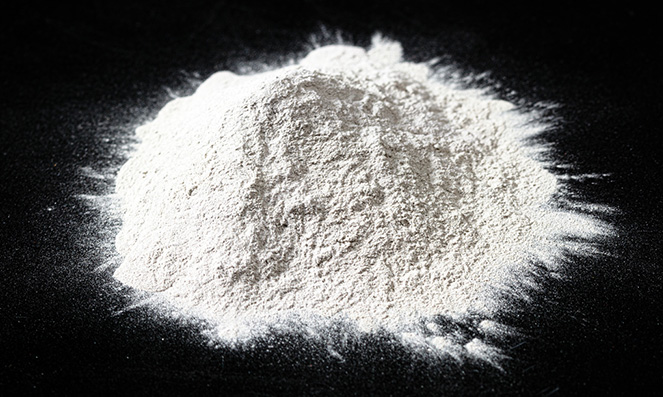
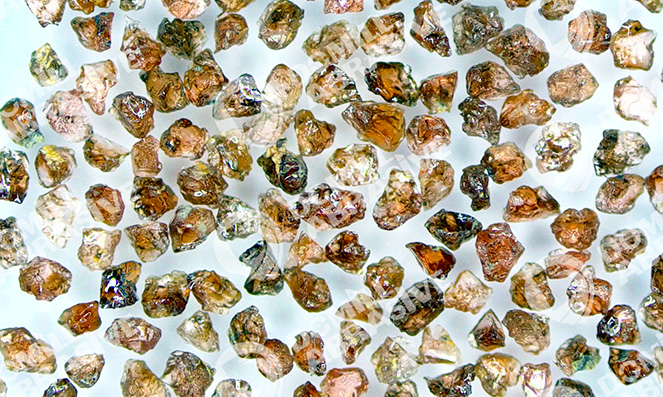
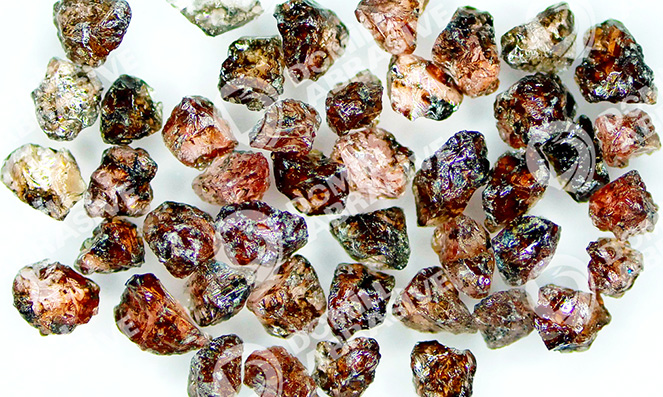
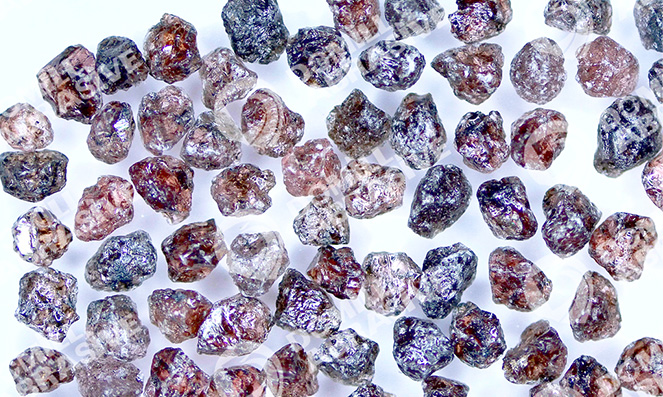
Utilizing multi-stage Barmac kinetic impacting and deep magnetic extraction, the A7 series yields section sands and fine fractions characterized by superior intra-granular density and exceptionally low apparent porosity. This morphology dramatically lowers the critical water-demand metrics of downstream monolithic castables during mixing while supplying superior hot modulus of rupture (HMOR) and an impermeable physical barrier against molten steel and aggressive corrosive slag. The portfolio delivers two dedicated engineering pathways: A70-R (Refractory Section Sand) and A75-R (Refractory Fine Powder). Together, they fortify industrial thermal arrays against structural degradation under violent thermal-mechanical cycling.
In high-capacity blast furnace runners, ladle refining zones, and precision technical brick installations, element segregation or low density in commodity aggregates triggers sudden catastrophic lining breaches. The DOMILL A7 chemistry is strictly monitored to eliminate the following severe high-temperature failure modes:
Premature Grain Boundary Liquefaction & Thermal Creep: Prevents high SiO2 and TiO2 residues inside generic grains from creating low-melting eutectic phases (e.g., anorthite or gehlenite liquid tracks) above 1500°C, a phenomenon that triggers crystal boundary sliding, structural softening, and severe linear reheating shrinkage.
Abrupt Thermal Shock Spalling & Structural Cracking: Overcomes severe macro-spalling, delamination, and face-powdering of refractory arrays during intermittent furnace campaigns or rapid tapping temperature drops, where high structural micro-fissures inside raw grains cause catastrophic thermal shock stress failure.
Deep Chemical Attack & Capillary Infiltration: Eradicates deep chemical slag anchoring and liquid metal migration common in low-density aggregates with high apparent porosity. A7's dense, low-void crystal cells block the capillary pathways that allow corrosive CaO-SiO2 slags to breach the grain core.
|
Category |
Property |
A70-R (Section Sand) MD |
A75-R (Fine Powder) MD |
Technical Context & Guidance MD |
|
Chemical Composition (Low Glass-Phase) |
Al₂O₃ Content |
≥ 95.50% |
≥ 96.00% |
Fully developed α-Al2O3 frame, sustaining refractoriness above 1850°C. |
|
|
TiO₂ Content |
1.60% - 2.40% |
1.40% - 2.20% |
Controlled solid solution window preserves base toughness against high-velocity kinetic erosion. |
|
|
Fe₂O₃ Content |
≤ 0.18% |
≤ 0.10% |
Minimizes iron to prevent iron-catalyzed CO disintegration and low-temp molten clusters. |
|
|
SiO₂ Content |
≤ 0.60% |
≤ 0.45% |
Vital Limit. Represses residual silicate glass webs to suppress crystal boundary creep. |
|
Physical Properties |
Bulk Density |
1.78 - 1.88 g/cm³ |
1.82 - 1.95 g/cm³ |
A70-R blocky morphology slashes water demand; A75-R activates solid-state sintering. |
|
|
Apparent Porosity |
≤ 4.5% |
≤ 4.5% |
Densely coalesced crystals with minimal voids, blocking corrosive slag capillary migration. |
|
Supply Scope |
Sizes Available |
Splits: 0-1 / 1-3 / 3-5 / 5-8 mm |
Fines: 180#-0 / 200# / 325# |
Comprehensive splits covering standard refractory distributions for automatic batching. |
|
|
Grading Standard |
GB/T 2481 / Refractory Protocols |
GB/T 2481 / Refractory Protocols |
Fully aligned with global industrial refractory grading protocols, securing identical void volumes. |
Ultra-Low Glass Phase & Superior Volumetric Thermal Stability: Through liquid-phase enrichment and element stripping, A7 suppresses SiO2 and Fe2O3 to absolute minimums. Stripped of continuous silicate glassy tracks at crystal boundaries, grains lock into rigid solid-to-solid contact under load, flattening structural creep curves and eradicating joint tearing.
Dense Low-Porosity Lattice & Elite Slag Infiltration Resistance: Deployed via controlled slow-cooling crystallization, A7 compresses apparent porosity below 4.5%. When assaulted by aggressive metallurgical slags, the lack of micro-voids starves capillary flow, forcing slag interactions to stall at the surface plane rather than provoking structural grain swelling.
Optimized Interlaid Matrix & Superior Thermal Shock Spalling Resistance: Processed via heavy Barmac mechanical impact, A70-R section sands display a blocky, multi-angular morphology with exceptional mechanical interlocking capabilities. Paired with high intrinsic thermal conductivity, the cured lining expertly dissipates multi-axial thermal-mechanical shock waves.
1. Blast Furnace Trough Castables & Main Runner Monolithics: Engineered for high-tier ASC (Al2O3-SiC-C) monolithic castables inside main runners and slag troughs of modern blast furnaces (3000m³ - 5000m³ scale), withstanding the kinetic scouring of super-heated liquid iron.
2. Steel Ladle Main Linings & Specialized Precast Shapes: Extensively integrated into heavy-tonnage steel ladle working layers, corundum-spinel castable formulations, and functional precast parts (purging plugs and well blocks), resisting linear contraction under severe refining heats (>1600∘C).
3. Sintered/Unburned Corundum Bricks & Functional Kiln Furnishings: Leveraging calibrated blends of A70-R section sands and A75-R reactive powders to press and bake high-tier corundum bricks, slide gate plates, and load-bearing pusher slabs for ceramic tunnel kilns.
Q: Why does A7’s “ultra-low SiO₂ (low glass phase)” footprint dictate the absolute survival of a refractory lining during prolonged campaigns above 1500°C?
A: Generic aggregates (such as the A1 series) carry SiO2 values often exceeding 1.2%
When deployed inside blast furnace main runners or ladle zones above 1500°C, these grain-boundary SiO2 domains bond with surrounding CaO and TiO2 to generate low-melting-point liquid eutectic films like anorthite (CAS2, melting around 1553°C). This inter-granular liquid film softens under thermal load, causing the hard alumina matrix to lose its rigid backbone and inducing microscopic boundary sliding. Macroscopically, this translates into aggressive thermal volumetric creep, load-softening structural sag, and drastic reheating linear contraction. DOMILL A7 strictly curtails SiO2 values (A75-R ≤0.45%), chemically suffocating the low-eutectic formulation zone and maintaining pure corundum-to-corundum solid interlocking.
Q: How does the apparent porosity threshold physically dictate the corrosion and erosion velocity of molten slag attacking a refractory aggregate? How does the A7 defense operate?
A: Refractory operational slags destroy furnace linings through aggressive "capillary infiltration."
If aggregate crystals are loosely formed with high apparent porosity (6% - 9%), metallurgical capillary forces drive molten slag through interconnected internal micro-voids into the grain core, establishing a thick "altered zone." This altered volume, heavily contaminated with CaO and SiO2, undergoes a massive shift in its thermal expansion coefficient relative to the pristine corundum core. During thermal fluctuations, intense shear stress tears through the boundary between these mismatched zones, inducing sudden deep grain fragmentation and bulk lining collapse. DOMILL A7 locks apparent porosity strictly below ≤4.5%. Grains act as solid, non-porous crystalline monoliths that starve the molten matrix of capillary channels, transforming catastrophic inner breaches into manageable surface erosion.
Please fill out the form.We will reply you in 24 hours.