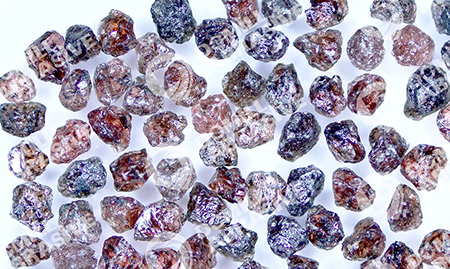
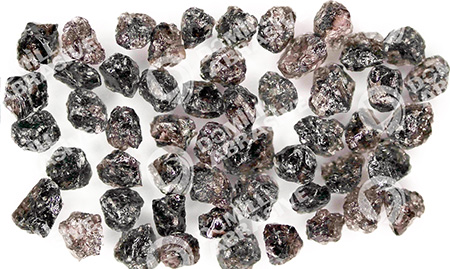
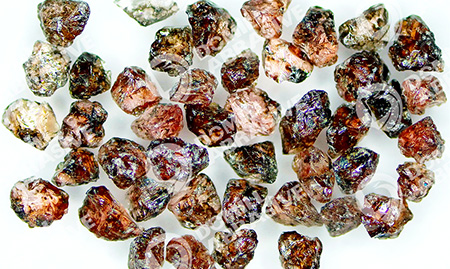
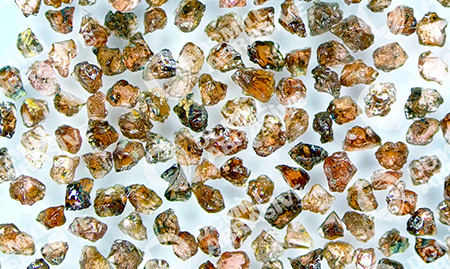
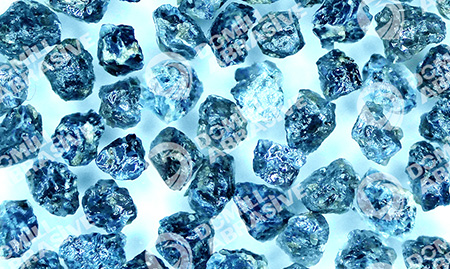
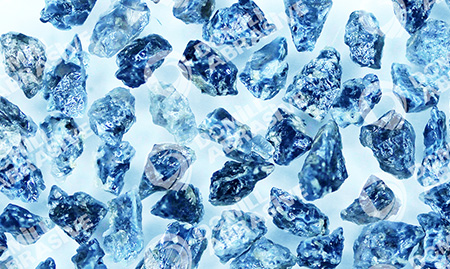
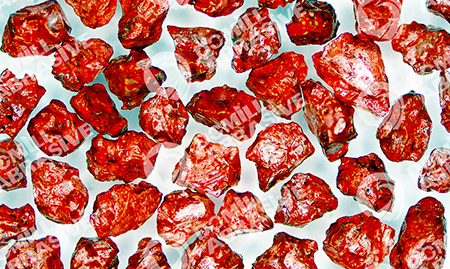
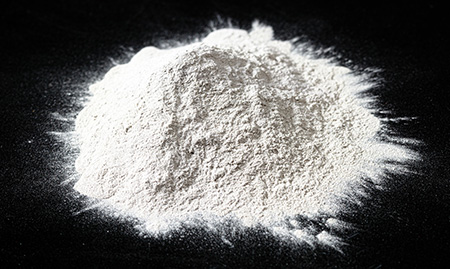
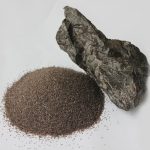
The DOMILL Brown Fused Alumina (BFA) series, continuously refined since 1993, is engineered to deliver repeatable manufacturing certainty for high-consumption grinding, blasting, and refractory applications worldwide. Produced through controlled high-temperature reduction fusion and stabilization processes, this series eliminates the batch-to-batch inconsistencies typical of commoditized materials.
By quantifying and managing crushing resistance, bulk density, and residual chemical phases, we ensure every shipment delivers the volumetric consistency automated production lines demand—resulting in predictable, reliable outcomes for bonded abrasives, coated systems, surface preparation, and monolithic refractories.

In large-scale automated production ecosystems, purchasing bulk abrasives from generic sources often introduces hidden failure risks. The DOMILL BFA portfolio rejects commoditized grading; our crystalline typography is micro-engineered to eliminate systemic vulnerabilities in high-stress manufacturing lines:
Erratic Batch Performance: Highly formulated to eliminate performance oscillations common in standard channels, securing uninterrupted processing for downstream wheel-pressing and coating lines.
Micro-Structural Aggregation: Engineered for high-RPM and heavy-duty snagging tools where mismatched internal thermal expansion would otherwise trigger catastrophic, early macro-shattering.
Aerodynamic Feeding Clogging: Optimizes the bulk media's kinematic profile to prevent volumetric variations and nozzle blockages in high-volume automated pneumatic feeding systems.
| Series | Technical Morphology Trait | Target Infrastructure | Why Choose This Series? (Engineering Edge) |
|---|---|---|---|
| A1 Series | Regular BFA (A12 / A15 / A18 VPC Track) | Commodity resinoid/rubber wheels, bulk blasting, generic refractories | Engineered for maximum Volumetric Packing Consistency (VPC). Eliminates mass variations and flow clogging. |
| A2 Series | Coated BFA (Controlled Aspect Ratio P-Grits) | Traditional paper/cloth sandpapers, standard sanding discs, general coated tools | Calibrated for steady electrostatic polarization. Prevents tumbling grain defects, ensuring sharp upward alignment. |
| A3 Series | Blasting BFA (A38-S / A38-P / A38-U Matrix) | Automated continuous cyclic blasting, wind power towers, marine steel prep | Engineered for extreme cyclic shattering resistance and iron lock (≤0.01%), preventing flash rust and dusting. |
| A5 Series | Bonded BFA (Tilting-Furnace A58 / A58-V) | Heavy-duty high-pressure snagging, steel ingot grinding, rail track cutting | Intercepts catastrophic cleavage splintering under extreme press-loads. Uses micro-cleavage to extend tool lifespans. |
| A6 Series | Premium Coated BFA (Controlled Smelt A62 Grade) | 3C electronics finishing, automotive topcoat repair, automated heavy belts | Delivers elite single-grain compressive strength and uniform fracture morphology to prevent shedding under extreme heat. |
| A7 Series | Refractory BFA (Ultra-Low Silica A75 / A78) | Core metallurgical smelting (>1500°C), blast furnace troughs, ladle linings | Zero-tolerance for high-temperature creep and slag erosion. Suppresses grain-boundary silica liquefaction. |
| A8 Series | Micro-Powder BFA (Sedimentation A88 Matrix) | Lapping films, precision micro-grit wheels/stones, semiconductor CMP | Crosses the 45 μm boundary. Eliminates rogue oversized grains to guarantee scratch-free mirror finishes. |
The superior performance of DOMILL BFA over conventional mineral stocks stems from our dedicated fusion and post-processing engineering frameworks, which reshape particle mechanics at the micro-physical level:
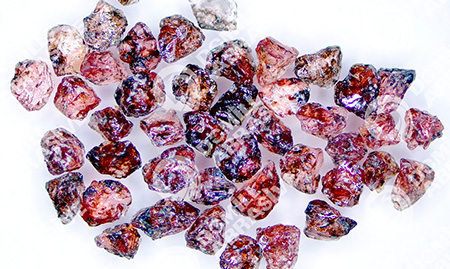
Macro-Structural & Mineral Phase Consistency: Standardized fusion cycles produce a uniform α-alumina microstructure, ensuring highly reproducible mechanical performance and thermal expansion behavior from batch to batch. Advanced stabilization treatment compels a uniform distribution of secondary phases (e.g., titanaugite) within the matrix, securing identical toughness across every single grain.
Tailored Grain Morphology & Kinematic Shaping: Mechanical post-processing employs dedicated crushing pathways (rod mills, roll crushers, Barmac, or impact mills) to precisely tailor grain shape—from blocky, cubical grains for blasting and bonded tools to sharp, high-aspect-ratio particles for electrostatic coating. Kinematic shaping unifies the aerodynamic drag profile, ensuring predictable fluid-like flow during delivery.
Suppressed Chemical Contamination & Iron Lock: Integrated multi-stage, high-intensity magnetic separation and chemical washing processes minimize free iron and alkali fractions (e.g., free iron ≤0.01% in A38-P). This effectively prevents impurity-induced thermal stress defects or sub-film galvanic corrosion during curing or high-temperature sintering.
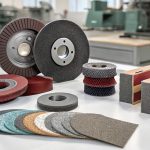
Bonded & Coated Abrasive Systems: Serves as the foundational workhorse for heavy-duty snagging wheels (A5), fast cutting discs (A1), and high-tension belts (A2/A6). For ultra-fine applications below 45 μm—including lapping films, micro-grit vitrified wheels, and superfinishing stones—the A8 Micro-powder series provides complete coverage, maximizing overall tool lifespan.
Surface Engineering & Blasting Media: Driven by the A3 Series (A38 Matrix) to provide high-recyclability blasting media for steel descaling, wind turbine prep, and creating verified Sa 2.5 / Sa 3.0 anchor profiles. Delivers high kinetic impact while maintaining elite shattering resistance inside automated recirculating blast chambers.
High-Temp Refractory & Precision Lapping: Deploys the A7 Series as creep-resistant structural aggregates for high-temperature castables and blast furnace troughs in steel metallurgy; alongside the A8 Series hydraulic-sedimentation microgrits for optical glass and semiconductor substrate CMP, guaranteeing scratch-free mirror finishes.
Q: How does mineral phase homogeneity in Brown Fused Alumina raw matrix dictate the operational stability of downstream abrasive tools?
A: Premium abrasive performance is not merely defined by bulk chemical percentages, but by the precise distribution of the crystalline phases. If the titanaugite and sub-microscopic inclusions within the alumina matrix are segregated unevenly, the grains will exhibit localized thermal expansion mismatch and erratic brittle fractures under high-speed grinding stress. DOMILL manages this at the source through our controlled stabilization process. By securing structural matrix homogeneity, we ensure that every single batch delivers identical physical cutting properties, eliminating micro-structural failures and erratic wear patterns in high-speed automated production.
Q: Why is granular fluid dynamics critical for high-volume automated bulk material pneumatic conveyance?
A: In mass-manufacturing feeding systems, erratic grain shapes cause erratic aerodynamic drag and friction coefficients. This triggers grain segregation inside storage silos, where flatter particles separate from blocky ones, leading to volumetric inconsistencies at the filling nozzle. DOMILL's comprehensive BFA portfolio utilizes advanced shaping and sizing to calibrate the drag profile of each grade. We ensure the bulk material behaves like a predictable fluid during high-velocity pneumatic delivery or mechanical dosing, preventing line clogging and maximizing batch consistency.