Home / News & Blog / Abrasive Blog / Steel Shot vs. Steel Grit: How to Choose the Right Option Based on Your Surface Treatment Needs?
In the surface treatment industry, steel shot and steel grit are two of the most commonly used metallic abrasives, widely applied in shot blasting, sandblasting rust removal, and surface preparation processes. As environmental regulations become increasingly stringent, steel abrasives have gradually replaced traditional silica sand and become the preferred choice in global manufacturing.
This article provides a comprehensive analysis of the differences between steel shot and steel grit, their production processes, technical parameters, and selection methods—helping international buyers, distributors, and industrial users make more informed decisions.
Although both are made from high-quality steel, steel shot and steel grit differ significantly in shape and function:
Steel Shot:
Spherical particles that rely on impact energy for cleaning or strengthening. When steel shot strikes the workpiece surface at high speed, it creates compressive stress, improving the metal’s fatigue strength. This makes it especially suitable for shot peening and applications requiring smooth surfaces.
Steel Grit:
Angular particles that rely on cutting action for aggressive surface treatment. With sharp edges, steel grit can cut through rust, scale, or old coatings like a tool, quickly creating a deeper surface profile and significantly improving coating adhesion.
In short: Steel shot is for impact, steel grit is for cutting.
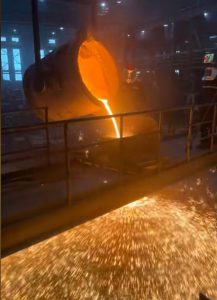
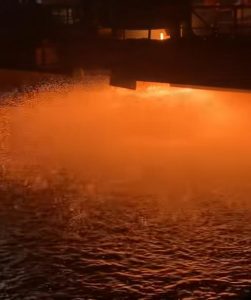
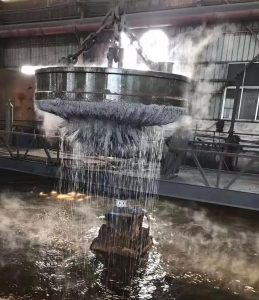
High-quality steel abrasives depend on advanced and precise manufacturing processes:
Raw Material Selection:
High-quality scrap steel and alloying elements (such as chromium and manganese) are selected and melted in medium-frequency induction furnaces to ensure stable chemical composition. Purity directly affects toughness and lifespan.
Atomization Process (Core Step):
Molten steel is poured onto a high-speed rotating disc, where centrifugal force breaks it into fine droplets. These droplets cool rapidly in water, forming spherical steel shot with smooth surfaces and dense internal structures. Precise control of atomization parameters determines roundness and density.
Heat Treatment:
Quenching increases hardness, while tempering relieves internal stress and improves toughness, reducing brittleness. A proper balance between hardness and toughness is key to long service life.
Crushing (Steel Grit Only):
Heat-treated steel shot is crushed mechanically into angular particles, then ground and screened to produce steel grit with varying sharpness.
Screening and Grading:
High-precision vibrating screens classify particles according to SAE standards (e.g., S110, S230, G25, G40). Non-conforming particles are recycled.
|
Parameter |
Typical Range |
Impact on Performance |
|
Hardness (HRC) |
40–65 |
Higher hardness = faster cleaning but lower toughness and higher breakage risk |
|
Size (Mesh/SAE) |
S70–S930 (shot); G10–G120 (grit) |
Finer = smoother surface; coarser = higher efficiency |
|
Density (g/cm³) |
≥7.4 |
Higher density = stronger impact and better efficiency |
|
Toughness (Breakage Rate) |
≤3% (cycle test) |
Higher toughness = more reuse cycles and lower overall cost |
3. Core Advantages
Compared with traditional abrasives like silica sand and garnet:
Environmentally Friendly: Dust reduced by over 80%, compliant with OSHA and EU regulations
High Efficiency: 30–50% faster cleaning than silica sand
Recyclable: Can be reused 500–3000 times under normal conditions
Consistent Surface Quality: Achieves Sa2.5–Sa3 surface standards
Silicosis-Free: No free silica, safer for workers
Steel shot and grit are widely used in:
Shot Blasting Cleaning: Casting sand removal, forging scale removal, steel structure pretreatment, aluminum deburring
Rust Removal: Bridge maintenance, pipeline cleaning, shipbuilding, offshore platform refurbishment
Shot Peening: Improves fatigue life of automotive springs, gears, connecting rods, and aerospace parts by over 50%
Surface Preparation Before Coating: Achieves roughness (Rz 40–100 µm), improving coating adhesion by 2–3 times
Stone Processing: Sandblasting engraving and texturing for granite, marble, and quartz
GP Steel Grit: Rounds off quickly, moderate sharpness—ideal for general cleaning and light rust/paint removal
GL Steel Grit: Medium hardness (45–55 HRC), wears evenly—suitable for surface preparation and medium etching
GH Steel Grit: High hardness (≥60 HRC), retains sharp edges longer—best for heavy-duty blasting, thick rust removal, and roll etching
For heavy scale removal or high roughness requirements, GH grit is the best choice.
Based on Substrate Material:
Soft metals (aluminum, zinc) → low hardness shot (40–45 HRC)
Heavy steel structures → high hardness shot or grit (55–60 HRC)
Based on Surface Requirement:
Smooth decorative finish → fine steel shot
Rough surface for coating → medium/coarse steel grit
Based on Equipment:
Centrifugal blasting machines → steel shot (better flowability)
Air blasting systems → steel grit (easier acceleration)
Based on Budget & Recycling:
With good recycling systems, choose high-toughness abrasives for lower long-term cost
The global steel abrasive market is growing at 5%–7% annually due to:
Environmental Replacement: Silica sand banned in many regions
Advanced Materials: Low-carbon and bainitic steel shot with 30–50% longer life
Smart Manufacturing: Automated production ensures consistent quality and traceability
Customized Solutions: Full-service support from equipment to recycling
International buyers should consider:
ISO 9001 certification
Compliance with SAE J444 and ISO 11124 standards
Annual capacity above 50,000 tons
Free sample testing and technical support
Export experience and availability of MSDS/TDS
Q1: Can steel shot and steel grit be used together?
Yes. Many factories use a two-step process: coarse GH grit for fast cleaning, followed by fine shot for finishing—improving both efficiency and surface quality.
Q2: What is the lifespan of steel shot and grit?
Steel shot: 2000–3000 cycles
Steel grit: 500–1000 cycles
Depends on hardness, impact energy, and workpiece material.
Q3: When should steel grit be replaced?
Significant rounding of particles (cutting efficiency drops >50%)
Dust (below 200 mesh) exceeds 20%
Cleaning efficiency drops by 30%
Q4: How does hardness affect cost?
Higher hardness is not always better. Too hard = brittle; too soft = inefficient. The best choice balances efficiency and toughness—verified through A/B testing.
Steel shot and steel grit are indispensable in modern surface treatment processes, directly affecting cleaning efficiency, coating quality, and production costs. As global demand for high-performance and environmentally friendly abrasives continues to grow, mastering proper selection methods and choosing reliable suppliers will give your business a significant competitive advantage.