Home / News & Blog / Abrasive Blog / Why Vitrified Grinding Wheels Are Essential for Precision Machining
In modern manufacturing, precision machining plays a critical role in industries such as automotive, aerospace, metal fabrication, electronics, and tool production. As industrial technology continues to advance, manufacturers demand grinding materials that provide higher efficiency, better dimensional accuracy, longer service life, and improved surface finishing performance. Among various abrasive products, vitrified abrasives have become one of the most widely used solutions for precision grinding and cutting applications.
Vitrified abrasives are highly valued for their excellent durability, thermal stability, sharp cutting ability, and consistent grinding performance. With the rapid development of intelligent manufacturing and automated machining systems, the global demand for high-performance vitrified grinding tools continues to grow.
Vitrified abrasives are abrasive tools manufactured using abrasive grains bonded together with a ceramic or glass-like vitrified bond. During the high-temperature firing process, the bonding materials form a strong and rigid structure that delivers excellent mechanical strength and heat resistance.
Compared with resin-bonded abrasives, vitrified abrasives offer:
Higher hardness and rigidity
Superior dimensional stability
Excellent porosity for coolant penetration
Better heat resistance
Longer service life
More precise grinding performance
Because of these advantages, vitrified grinding wheels are commonly used in precision machining environments where accuracy and surface quality are essential.
The performance of vitrified abrasives largely depends on the quality of abrasive grains and bonding systems used during manufacturing.
DOMILL provides premium aluminum oxide abrasive grains and silicon carbide abrasive grains that are ideal for producing high-performance vitrified grinding tools. These materials are combined with:
Bonding agents
Wetting agents
Colorants
Pore-forming agents
Through optimized formulations and advanced production processes, manufacturers can produce a wide range of vitrified abrasive products, including:
Vitrified grinding wheels
Mounted points
Grinding rods
Industrial cutting tools
Precision grinding accessories
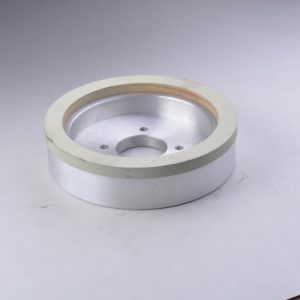
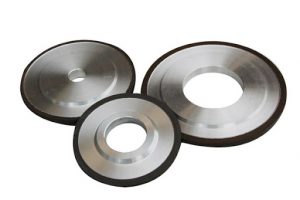
Vitrified grinding wheels maintain sharp cutting edges during operation. Their rigid structure allows abrasive grains to cut efficiently while reducing unnecessary friction. This improves grinding speed and material removal rates.
Heat generation is one of the biggest challenges in grinding operations. Excessive heat may cause burns, cracks, and dimensional inaccuracies on workpieces.
Vitrified abrasives exhibit excellent heat resistance and thermal stability. Their porous structure helps coolant flow effectively into the grinding zone, minimizing heat accumulation and protecting the workpiece surface.
Due to their low thermal expansion and stable structure, vitrified grinding wheels provide excellent dimensional consistency. This makes them highly suitable for applications requiring tight tolerances and precision finishing.
The open-pore structure of vitrified abrasives allows chips and debris to escape easily during grinding. This significantly reduces wheel loading and clogging, maintaining stable grinding performance over long operating periods.
The strong ceramic bonding structure improves wear resistance and durability. As a result, vitrified grinding tools generally last longer than many conventional abrasive products, reducing downtime and replacement costs.
Vitrified abrasives are widely used across multiple industries because of their versatility and precision performance.
Surface grinding is one of the most common uses for vitrified grinding wheels. These grinding wheels are ideal for producing flat, smooth, and accurate surfaces on metals and other hard materials.
Industries using vitrified abrasives for surface grinding include:
Automotive manufacturing
Aerospace engineering
Mold and die production
Precision machinery manufacturing
The excellent rigidity of vitrified wheels ensures high-quality finishes and precise tolerances.
Vitrified grinding wheels are extensively used in cylindrical grinding and centerless grinding processes for machining shafts, bearings, rollers, and precision components.
These applications require:
Consistent wheel geometry
Stable grinding performance
High roundness accuracy
Smooth surface finishes
Vitrified abrasives provide reliable results even during high-speed production operations.
High-performance cutting tools require precise edge formation and excellent wear resistance. Vitrified abrasives are commonly used in the manufacturing and sharpening of:
Diamond tools
Circular saw blades
Carbide cutting tools
Precision knives
Their sharp cutting action helps achieve accurate tool geometries while minimizing tool wear during processing.
Industrial cutting tools such as drills, milling cutters, and lathe tools require regular grinding and maintenance to maintain cutting efficiency.
Vitrified abrasives are highly effective for tool grinding because they offer:
Stable cutting performance
Excellent edge retention
High grinding precision
Reduced thermal damage
This improves tool life and machining productivity.
In addition to grinding, vitrified abrasives are also used for polishing and finishing applications on materials such as:
Stainless steel
Ceramics
Glass
Hardened alloys
These abrasive tools help achieve smooth surfaces, reduced roughness, and high-quality cosmetic finishes required in advanced manufacturing industries.
Two of the most common abrasive materials used in vitrified grinding wheels are aluminum oxide and silicon carbide.
Aluminum Oxide Abrasives
Aluminum oxide abrasive grains are known for:
High toughness
Good wear resistance
Excellent grinding stability
They are suitable for grinding carbon steel, alloy steel, high-speed steel, and ferrous metals.
Silicon Carbide Abrasives
Silicon carbide abrasive grains offer:
Higher hardness
Sharp cutting edges
Excellent thermal conductivity
They are ideal for grinding:
Non-ferrous metals
Ceramics
Glass
Cast iron
Carbide materials
DOMILL supplies both high-quality aluminum oxide and silicon carbide abrasive grains to meet diverse industrial grinding requirements.
As manufacturing technology evolves toward automation, intelligent machining, and ultra-precision processing, vitrified abrasives are expected to play an even more important role in industrial production.
Future development trends include:
High-porosity grinding wheels
Energy-efficient grinding solutions
Ultra-precision grinding tools
AI-assisted grinding systems
Eco-friendly abrasive materials
Manufacturers increasingly require abrasive solutions that improve productivity while reducing operational costs and environmental impact.
DOMILL focuses on supplying high-quality abrasive grains and raw materials for vitrified abrasive manufacturing. With reliable product quality and stable performance, DOMILL abrasive materials are widely used in precision grinding and industrial machining applications worldwide.
Key advantages include:
Consistent grain quality
Excellent hardness and toughness
Stable chemical composition
Customized abrasive solutions
Professional technical support
By combining advanced abrasive materials with optimized vitrified bonding systems, manufacturers can produce grinding tools that deliver exceptional performance and long-term reliability.
Vitrified abrasives have become indispensable tools in modern precision grinding and cutting industries. Their superior strength, heat resistance, dimensional stability, and grinding efficiency make them ideal for demanding industrial applications.
From surface grinding and cylindrical grinding to tool manufacturing and polishing operations, vitrified grinding wheels continue to provide reliable and high-precision machining solutions.
As industrial manufacturing advances toward higher precision and automation, high-performance abrasive materials from DOMILL will continue supporting the development of next-generation vitrified abrasive products and grinding technologies.