Home / Products / Brown Fused Alumina (BFA) / A3: Blasting Brown Fused Alumina
The DOMILL A38 Blasting Media series is an engineered portfolio purpose-built to eliminate risk in critical surface preparation.
The entire A38 family is anchored on a premium, high-purity crystal matrix with Al₂O₃ >95%, utilizing proprietary shape-control technology to ensure volumetric stability and geometric isotropy under continuous high-velocity impact.
To address stringent industrial regulations for surface microstructure, chemical purity, and recyclability, this series builds a three-dimensional technical matrix comprised of A38-S (Standard Engineering Grade), A38-P (Ultra-Clean Grade), and A38-U (High-Recirculation Grade). From heavy-duty stripping of long-distance pipelines to safety-critical wind-power components and fully automated, high-recirculation blasting loops, the A38 matrix delivers predictable processing certainty.
In advanced aerospace, wind energy, and heavy precision industries, surface preparation is defined by absolute physical and chemical certainty. The DOMILL A38 matrix systematically prevents and eliminates the following critical operational failures:
Free Iron Contamination & Flash Rusting: Unmanaged metallic fractions in commodity grains easily embed into metal substrates during blasting. Once encapsulated under protective coatings, these impurities trigger localized galvanic corrosion, forcing early paint delamination and blister spotting.
Media Pulverization & Stripping Slowdown: Particles with internal micro-stress defects pulverize rapidly under high-velocity nozzle discharge, causing stripping efficiency to collapse. This drops surface profile quality while triggering severe workspace dusting that obscures visual clarity.
Rapid Grain Glazing & Profile Inconsistency: Generic abrasives with irregular aspect ratios experience early fracture of weak edges inside recirculating loops, rapidly reducing media size and glazing the grains, making it impossible to strike verified Sa 2.5 / Sa 3.0 anchor profiles.
Technical Context: A38 series strictly controls Free Iron content and internal crystal stress defects, providing targeted grading for different recirculation grain decay models.
Technical Specifications & Composition Calibration (Table)
| Technical Specs | A38-S (Standard Engineering) | A38-P (Ultra-Clean Grade) | A38-U (High-Recirculation) |
|---|---|---|---|
| Core Attribute | High-density kinetic shaping | Deep structural purity control | Crystal matrix modification |
| Al₂O₃ Crystal Window | 94.8%−95.5% | 95.0%−95.8% | 95.5%−96.2% |
| Free Iron Threshold | ≤0.03% | ≤0.01% (Ultra-pure window) | ≤0.015% |
| Bulk Density | 1.85−1.95 g/cm³ | 1.88−1.98 g/cm³ | 1.92−2.05 g/cm³ |
| Morphology | Isotropic Blocky | Ultra-Clean Blocky | Toughened Blocky |
| Grain Toughness | Standard industrial impact | Enhanced stress-relieved toughness | Supreme shatter resistance |
| Available Sizes | FEPA F12 - F220 | FEPA F12 - F220 | FEPA F12 - F120 |
| Compliance | FEPA F-Series / GB/T 2481 | Wind-Power Specs / ISO 8501 | High-Recirculation Specs |
4. Horizontal Performance & Application Scenario Matrix
| Technical Metrics | A38-S (Standard Engineering) | A38-P (Ultra-Clean Grade) | A38-U (High-Recirculation) |
|---|---|---|---|
| Recycle Lifespan | Standard industrial level | Good (Internal stress released) | Supreme (Highest reuse cycle) |
| Free Iron Level | ≤0.03% | Top-tier lock (≤0.01%) | Strictly managed (≤0.015%) |
| Stripping Rate | Intense burst, rapid initial cut | Constant & controlled | Highly sustainable (Top decay resistance) |
| Core Strengths | Concentrated impact, high coverage | Pristine base, chemically passive | Structurally sound, anti-pulverization |
| Target Applications | Bulk corrosion prep, pipelines, open-air economical blasting | Wind turbine parts, marine titanium, nuclear grade base | Automated recirculation cells, robotic assembly loops |
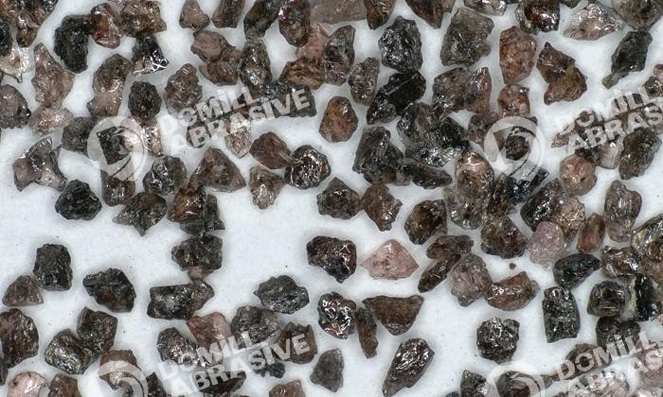
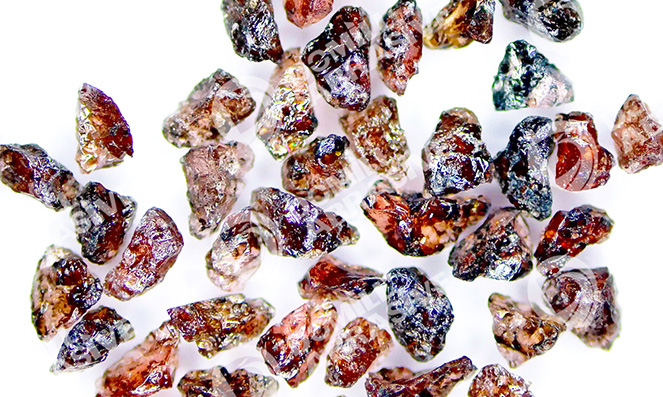
A38-S Standard Engineering Grade: Engineered with precision structural conditioning, this grade eliminates fragile, elongated fractions to deliver high bulk density. It provides excellent fluid dynamics and concentrated kinetic impact during pneumatic transport, making it the premier cost-effective choice for heavy-duty, high-volume surface stripping.
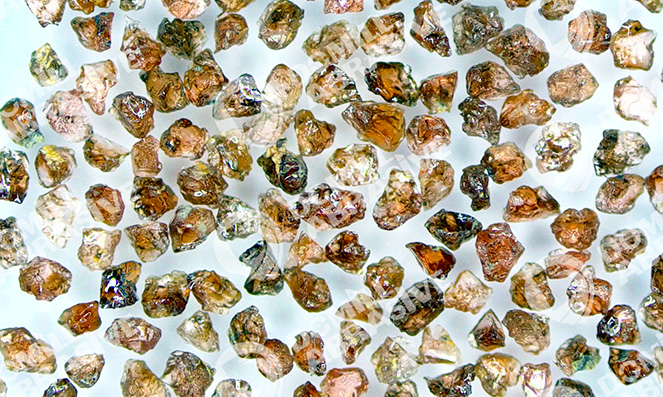
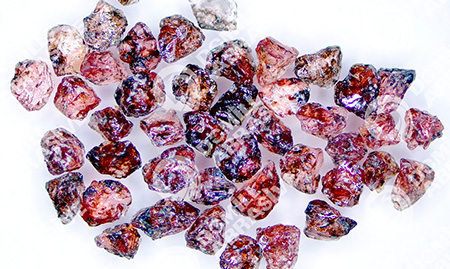
A38-P Ultra-Clean Grade: Features advanced subsurface purification to limit free iron to an industry low of ≤0.01%. The grain surfaces are pristine and dust-free, custom-engineered for safety-critical components to completely intercept oxidation spots, flash rust, and cross-contamination under high-performance paint films.
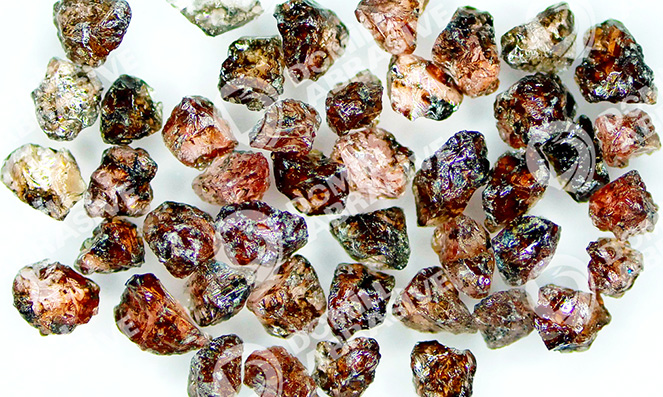
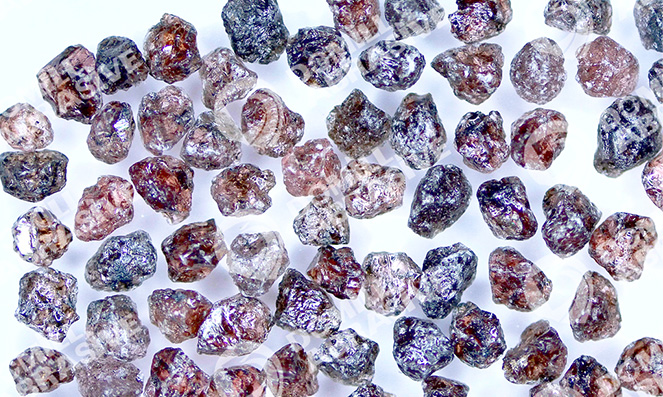
A38-U High-Recirculation Grade: Utilizes proprietary structural stabilization to heal internal micro-fractures, creating a highly dense, shock-resistant mineral matrix. Within automated, high-velocity multi-nozzle recirculating blast systems, it delivers an extended operational lifespan and remarkably low hourly replenishment rates.
1. Wind Power Structures & Marine Coating Preparation: Driven by the A38-P track, this is the designated solution for megawatt-scale wind turbine tower interiors, blade hubs, and offshore platforms requiring Sa 3.0 blasting standard. Its highly purified chemistry secures reliable anchoring for heavy anti-corrosion primers, maximizing long-term coating adhesion.
2. Automated High-Recirculation Blasting Loops: Powered by the A38-U track, this grade is custom-tailored for automated automotive chassis assembly loops and heavy forging/casting robotic blast cells. Because its optimized structural integrity prevents early fracturing, the grains maintain blocky geometries over extended recirculation cycles, sharply lowering dust collection maintenance.
3. Long-Distance Pipelines & Infrastructure Descaling: Deploys the A38-S track for large-diameter pipelines, field-welded seams of massive oil storage tanks, and steel box girders of infrastructure bridges, leveraging the concentrated impact force of conditioned grains to rapidly strip stubborn mill scale and weathered protective layers within standard operational budgets.
Q: From a surface engineering perspective, why is the Al₂O₃ >95% chemistry threshold coupled with <0.01% free iron so critical for high-end heavy-duty coatings?
A: High-performance coatings in severe environments (like offshore wind or marine structures) demand absolute chemical passivity on the substrate post-blast. Commodity media with unmanaged iron inclusions will physically force iron particles into the substrate steel under high-velocity impact. Once trapped beneath a paint film, these embedded iron contaminants react with microscopic moisture to form localized galvanic cells, causing flash rust, osmotic blistering, and premature coating delamination. DOMILL's A38-P strictly restricts free iron to ≤0.01%, safeguarding safety-critical components from latent sub-film corrosion.
Q: Inside an enclosed automated blasting chamber, how does the A38-U grade optimize the real cost-per-square-meter compared to standard blasting media?
A: In high-volume automated blasting cells, evaluating media solely on initial purchasing cost is an operational error; the critical metric is the "replenishment rate per operating hour." Standard abrasives with internal stress fissures break apart immediately along those cleavage planes upon initial impact, generating useless micro-fines that are instantly evacuated by the dust extraction system. The A38-U grade features a stabilized internal crystal matrix that effectively withstands repeated high-load collisions without shattering. This drastically extends the lifecycle of the media mix, leading to fewer hourly replenishments, lower waste disposal fees, and highly uniform anchor profile depths over extended manufacturing campaigns.
Please fill out the form.We will reply you in 24 hours.