Home / Products / Brown Fused Alumina (BFA) / A5: Bonded Abrasives Brown Fused Alumina
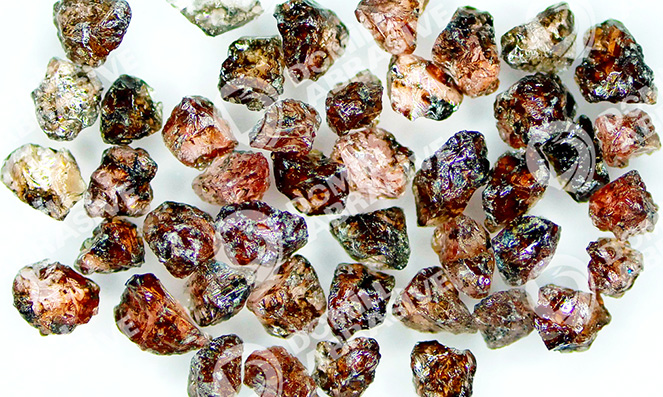
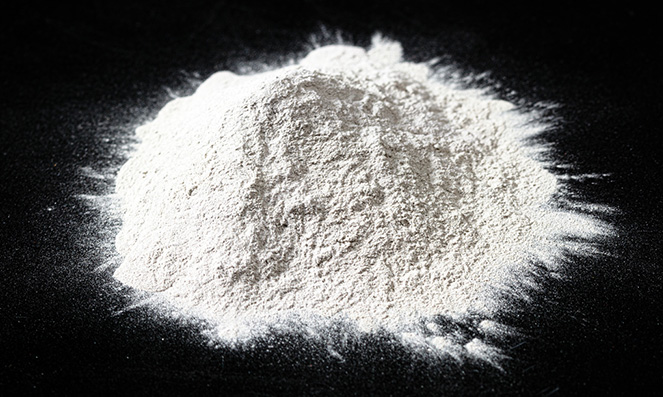
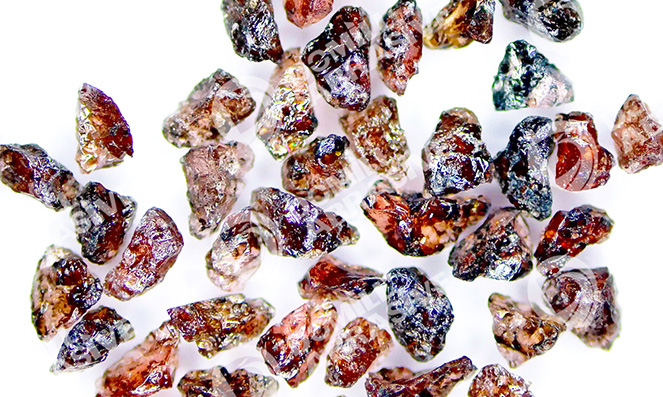
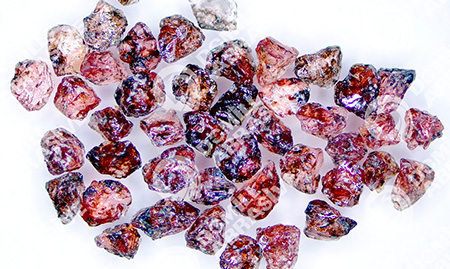
The DOMILL A5 series is the standardized industrial workhorse engineered to balance extreme structural toughness with uncompromised operational safety in high-stress bonded abrasive manufacturing.
Derived from premium tilting furnace stock treated with proprietary rapid-cooling technology, this grade infuses a dense micro-crystalline tough phase into the crystal core. By disrupting standard crystalline cleavage continuity, it serves as the premier choice for enterprises pursuing absolute grinding security and consistent mechanical power delivery. This series perfectly fulfills the rigorous parameters required by heavy-duty high-pressure resinoid snagging wheels (steel ingot and slab grinding), high-velocity rail track cutting, and high-tier precision vitrified wheels demanding exceptional post-firing aesthetics.
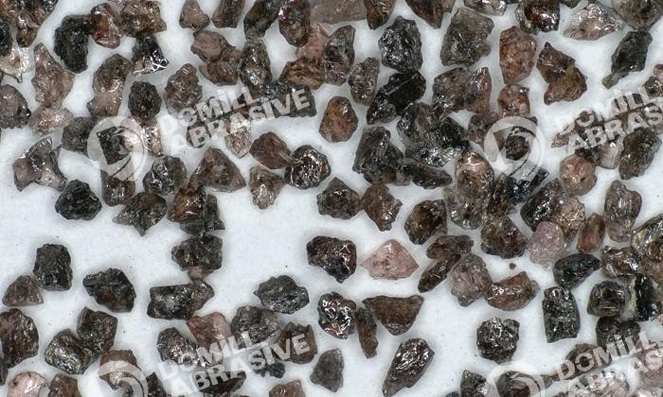
Through advanced Barmac mechanical shaping and deep-level multi-stage magnetic extraction that eliminates fragile crystalline edges, loose micro-fines, and volatile alloy inclusions, it establishes an exceptionally dense volumetric packing and pristine matrix purity. Across two precise technical tracks---A58 (Bonded General Grade) and A58-V (Vitrified Specific Grade)---it secures uniform cavity-filling during automated hydraulic pressing for organic tools. Meanwhile, its optimized element seclusion strictly suppresses post-firing spots or thermal stress cracking inside advanced vitrified matrix configurations, providing automated continuous production lines with an elite defense against premature wheel failures.
In high-volume, continuous heavy-duty snagging, rail track slicing, precision external component grinding, and high-speed machining, structural flaws in bulk abrasives can destabilize entire production tools. The DOMILL A5 matrix is strictly monitored to eliminate the following operational failures common in generic sourcing:
Catastrophic Cleavage Splintering under Extreme Press-Loads: Minimizes erratic macro-crystal fracturing inside conventional grains along their natural cleavage planes under aggressive feed rates or heavy-tonnage impact, substituting it with a controlled micro-cleavage mechanism to sustain constant cutting sharpness and protect tool lifespans.
Premature Structural Shedding & Bonding Interlocking Variance: Prevents structural grain pull-out and uneven cavity wear triggered by irregular slivers or low-sphericity particles experiencing extreme centrifugal and shear forces at high RPMs (e.g., 80m/s - 100m/s cutting-off sheets), maximizing mechanical interlocking with phenolic resins or vitrified matrix lattices.
Post-Firing Black Spots & Thermal Stress Micro-cracks inside Vitrified Tools: Fundamentally eliminates the thermal migration and localized pooling of hidden iron-titanium inclusions under prolonged baking above 1200°C, preventing the generation of dark spots, structural gas cavities, or micro-cracks inside precision vitrified arrays that compromise high-speed rotational balancing.
Technical Context: Bulk density and magnetic residue parameters naturally vary across different grit sizes due to spatial interlocking clearances. To establish a standardized engineering baseline, DOMILL benchmarks the technical parameters of the A5 series strictly using FEPA F36 grit as the calibration reference.
| Property | Specification Matrix | Technical Context & Guidance |
|---|---|---|
| Al₂O₃ Content | 95.20% ~ 95.60% | High-purity alumina skeleton ensures fundamental hardness and rigid structural integrity for bonded tools under high RPM and extreme cutting loads. |
| TiO₂ Content | 1.70% ~ 2.50% | Enters the alumina lattice to precisely calibrate toughness, working with rapid-cooling to build a micro-crystalline matrix for extreme shear resistance. |
| Fe₂O₃ Content | ≤ 0.20% | Strictly represses iron residues; A58-V grade enforces a zero-spot limit to eliminate thermal migration, voids, and micro-cracks during high-temp vitrified baking. |
| SiO₂ Content | ≤ 0.90% | Restricts low-melting silicate phases to prevent matrix liquefaction and volume creep during aggressive continuous grinding or high-temp sintering. |
| A58 Bulk Density (FEPA F36 calibrated) | 1.76 - 1.88 g/cm³ | Blocky grains shaped by Barmac for high spatial packing. Premier choice for heavy-duty resinoid snagging wheels and rail cutting discs, stabilizing automatic pressing weights. |
| A58-V Bulk Density (FEPA F36 calibrated) | 1.82 - 1.94 g/cm³ | Ultra-dense blocky topology for vitrified wheels. High sphericity ensures tight structural packing in automatic molding loops, preventing firing shrinkage deviations. |
| Magnetic Residue | ≤ 0.0040% | Multi-stage high-intensity magnetic traps extract sub-microscopic metallic elements, eliminating spot segregation and safeguarding absolute dynamic balance at extreme velocities. |
| Available Grit Sizes | FEPA F12 - F220 (custom blends available) | Full bonded grit range with absolute morphological and chemical uniformity, optimized for seamless automated blending fractions with resinoid and vitrified bonds. |
| Grit Distribution Standard | FEPA Standard 42 / GB/T 2481 | Fully aligned with international bonded standards, ensuring zero lot-to-lot grain distribution variance for stable automated production lines; JIS/ANSI specs available upon request. |
High Toughness via Tilting Furnace Smelting & Controlled Cooling: Produced via tilting furnace smelting with controlled cooling, enabling well-developed crystal grains with reliable fracture resistance. Under heavy mechanical forces, the grain offers steady wear and progressive self-sharpening for bonded tools.
Stable Volumetric Density via Barmac Shaping: Controlled aspect ratios and particle sphericity provide predictable volumetric flow. Whether filling heavy snagging wheel molds or loading high-speed cutting disc production lines, it stabilizes mass consistency and reduces dimensional variation.
Improved Matrix Purity via Multi-Stage Magnetic Extraction: Utilizes multi-stage magnetic separators to eliminate free iron and magnetic elements. The A58-V grade enforces strict purity controls, improving wet-out with vitrified or organic bonds to support tool consistency.
1. Heavy-Duty Resinoid Snagging & Ingot Grinding Wheels: Deployed for the mass production of 24-inch to 36-inch heavy-duty, large-diameter organic-bonded snagging wheels used on automated conditioning machine loops, providing aggressive metal removal on stainless steel slabs, forged parts, and heavy carbon steel blooms.
2. High-Speed Rail Track Slicing & Heavy Cutting-Off Wheels: Utilizing high-toughness A58 grains for the production of massive high-velocity rail track cutting wheels and industrial section slicing sheets, ensuring flat, burst-free perpendicular cuts on thick alloy structures and rail webs without altering metallographic tempers.
3. Precision High-Tier Vitrified Wheels & Bearing Grinding Tools: Exclusively specifying A58-V Grade. Tailored for advanced vitrified grinding wheels serving automotive crankshafts, camshafts, transmission lines, and high-tier roll bearing race channels, preserving immaculate dynamic balance profiles throughout prolonged continuous operational lifetimes.
The A5 series (A58 / A58-V) serves as a cost-effective standard skeleton for heavy-duty snagging and conventional vitrified wheels. To help manufacturers optimize cost and grinding efficiency strictly within the bonded abrasives product matrix, please refer to the following selection and tiering guidelines:
【Cost Optimization】 For Standard Resin Cutting Discs & Angle Grinding Wheels:
Application Boundary: For commodity-grade, light-to-medium duty cutting-off discs (e.g., standard 100mm-350mm discs) or manual angle grinding wheels, the A5 series may represent over-specification. We recommend selecting the `A1 Series (General Purpose BFA)`, which provides sufficient mechanical strength and dynamic safety at a more competitive cost point.
【Mid-Tier Upgrade】 For High-Tier Vitrified Wheels & High-Wettability Resin Wheels:
Application Boundary: A58 / A58-V consists of uncalcined raw BFA grains. If your wheel manufacturing demands superior surface wettability (hydrophilicity), higher mechanical interlocking with organic/vitrified bonds, or reduced micro-cracking risks, upgrade to `AT58: Medium-Temperature Calcined Bonded BFA`. AT58 undergoes ~1050°C calcination to relieve internal stress and purge surface impurities, noticeably improving bond adhesion.
【Heavy-Duty Upgrade】 For Resinoid Foundry Cut-Off & Snagging Wheels:
Application Boundary: For extreme-duty applications such as resinoid foundry wheels and heavy casting snagging discs subjected to intense mechanical shock, severe vibration, and extreme friction heat, upgrade to `AB58: High-Temperature Calcined Bonded BFA`. Treated via high-temperature calcination (1300°C+), AB58 reconfigures lattice iron-titanium phases, drastically enhancing toughness, thermal shock resistance, and bond interlocking strength for heavy-duty foundry tools.
Q: Why can the micro-crystalline structure systematically eliminate "catastrophic macro-splintering" flaws in heavy-duty snagging wheels under load?
A: In mass-production heavy conditioning lines (e.g., steel ingot grinding), the wheel must endure immense, continuous normal force. Regular BFA (A1 Series) relies on macro-crystalline clinkers with massive individual crystals and continuous natural cleavage planes. When subjected to intense mechanical loading, crack networks propagate instantly straight through the cleavage vectors, causing the bulk grain to experience sudden catastrophic fragmentation into useless dust, destroying wheel lifespans. DOMILL A5's rapid-cooled micro-crystalline topology shatters this limitation. The forced thermal solidification embeds thousands of microscopic crystal domains aligned in chaotic directions into the grain core. As a stress-induced crack tries to traverse inward, it continuously collides with these intersecting micro-boundaries, which deflect and blunt the crack front. Consequently, massive fracturing is substituted by a highly disciplined, layer-by-layer micro-cleavage scaling mechanism, combining elite shattering resistance with continuous self-sharpening efficiency.
Q: Why does high-tier precision vitrified wheel manufacturing mandate an exceptionally low tolerance for internal free iron and microscopic magnetic aggregates? What are the blind spots of commodity magnetic clearing?
A: Vitrified grinding wheels are created by firing abrasive particles with clay-based silicate bonds under temperatures exceeding 1200°C for extensive cycles. Generic industrial magnetic separation lines only skim away large, superficial free iron shards, leaving sub-microscopic iron-titanium compounds safely encapsulated deep within the grain boundaries or surface fissures entirely untouched. Under extreme sintering thermal conditions, these hidden metallic elements undergo intense thermal migration, aggregating outward and generating localized melt spots that bond electrochemically with the surrounding vitrified clay. This results in disfiguring post-firing dark spots and molten pitting across the product surface. More critically, the chemical phase transformations inside these dark spots create localized thermal expansion mismatches against the surrounding wheel matrix, inducing latent net-like micro-cracks during cool-down phases. When the finished wheel accelerates to high RPM grinding velocities on automated rows, these micro-cracks serve as catastrophic stress multipliers that invite sudden wheel bursting. DOMILL A58-V employs deep multi-stage magnetic trapping alongside element seclusion, extracting these micro-impurities at the molecular frontier to eliminate post-firing structural and aesthetic instability.
Please fill out the form.We will reply you in 24 hours.