Home / Products / Non-Woven Materials / Scrim-Backed SCT Rolls (Flax Series)
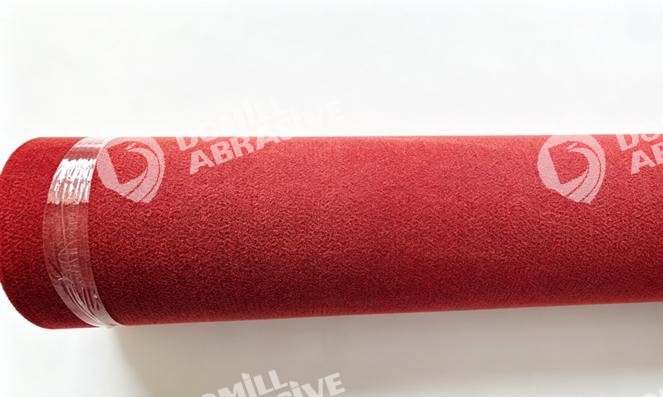
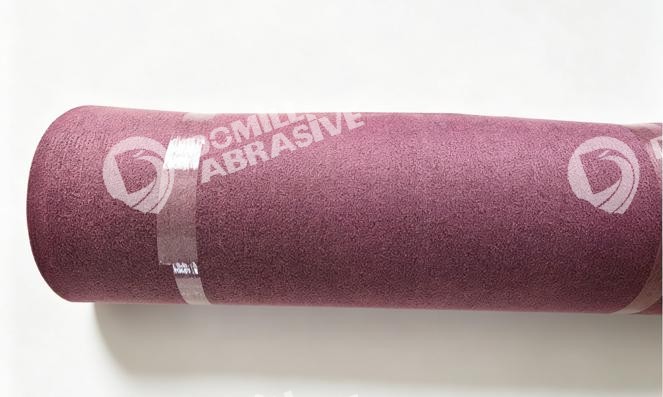
DOMILL Scrim-Backed SCT Rolls (Flax Series) are engineered specifically as premium semi-finished jumbo roll substrates for global abrasive tool converters.
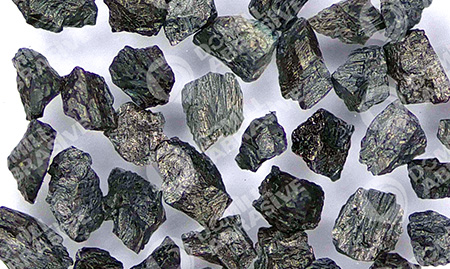
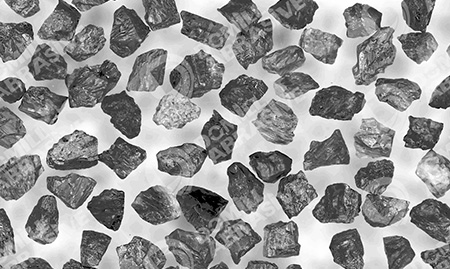
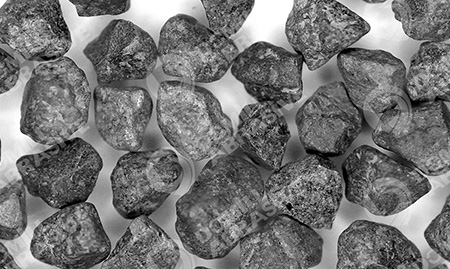
Built upon high-tenacity Nylon 66 continuous fibers impregnated with premium Aluminum Oxide (AO) grains and high-performance resin, these rolls feature a high-strength woven scrim mesh backing thermally laminated onto the bottom surface. While standard rolls feature premium Aluminum Oxide, DOMILL offers complete grain customization (including Ceramic Microcrystalline Corundum, Zirconia Alumina, and Silicon Carbide) based on specific customer requirements.
Unlike standard unreinforced non-woven webs, DOMILL Flax Series materials are built specifically to withstand extreme planar shear forces and centrifugal tearing. The structural scrim mesh provides exceptional dimensional stability and transverse rigidity, preventing edge delamination or web tearing during high-RPM grinding along sharp workpiece corners. Delivering exceptional cross-web GSM uniformity and superior wettability for hot-melt adhesives and plastic Roloc buttons, DOMILL Scrim-Backed SCT jumbo rolls are the premier choice for converting into quick-change Roloc discs, hook-and-loop discs, and pressure-sensitive adhesive (PSA) discs.
1. Edge Tearing & Mesh Delamination on Sharp Corners: Unreinforced or poorly laminated discs frequently tear or split along the mesh line when striking sharp metal edges. DOMILL uses a thermosetting resin-lock technology to fuse the scrim mesh directly into the nylon fiber lattice, delivering high peel strength that eliminates mesh delamination under extreme corner grinding.
2. Die-Cutting Fiber Fraying & Rough Edges: Inferior substrates suffer incomplete cutting during punching, leaving messy, stringy fiber fraying on disc edges. DOMILL optimizes the scrim weave density and resin flexibility, ensuring razor-sharp, clean-cut disc edges during high-speed die-punching.
3. Button Bonding & Hook-and-Loop Adhesive Failure: Poor adhesive penetration into dense backings leads to Roloc buttons or hook-and-loop backings popping off under torque. DOMILL's scrim surface undergoes chemical activation, allowing hot-melt adhesives to anchor through mesh voids for maximum mechanical locking.
|
Specification / Color |
Abrasive Type |
Grit Specification |
Primary Applications |
|
Brown |
Aluminum Oxide (AO) |
46# / 60# Mixed Grains |
Heavy deburring, weld blending, scale removal, coarse prep. |
|
Red |
Aluminum Oxide (AO) |
60# / 80# Mixed Grains |
Medium-heavy deburring, weld seam finishing, edge chamfering. |
|
Green |
Aluminum Oxide (AO) |
120# |
General metal satin finishing, scratch blending, surface repair. |
|
Blue |
Aluminum Oxide (AO) |
180# |
Fine line finishing, matte conditioning, pre-coat preparation. |
|
Grey |
Aluminum Oxide (AO) |
400# |
Ultra-fine blending, delicate cleaning, pre-polish conditioning. |
Note (Abrasive Grain Customization): The above table represents standard factory stock specifications. DOMILL offers full abrasive grain customization tailored to customer application requirements. Grain types can be upgraded to Ceramic Microcrystalline Corundum (SG), Zirconia Alumina (ZA), or Silicon Carbide (SiC).
|
Specification Item |
Standard Value / Range |
Notes |
|
Standard Jumbo Width |
1,430 mm |
1,430mm extra-wide format maximizing disc punching yield |
|
Standard Roll Dimensions |
21 m (Calculated at 29 sq.m.) |
Standard factory stock specification |
|
Custom Roll Length |
Up to 50 m |
Custom roll length tailored to automated press uncoiling |
|
Thickness Range |
5.0 mm – 8.0 mm (±0.5 mm) |
Adjusted according to grit specs (Brown 46# to Grey 400#) |
|
Scrim Backing Type |
High-Strength Scrim Mesh |
Bottom laminated mesh preventing shear tearing & fraying |
|
Basis Weight (GSM) |
800 g/m² – 1,400 g/m² (±3%) |
High cross-web GSM uniformity protecting die knives |
|
Tensile Strength |
MD ≥ 1,200 N/50mm; CD ≥ 1,000 N/50mm |
MD=Machine Direction, CD=Cross Direction (High planar shear) |
1. Superior Planar Shear Resistance: The high-density bottom mesh stabilizes the underlying fiber structure, ensuring converted discs maintain structural integrity without distorting or flying apart at 12,000-20,000 RPM.
2. Sharp Punching Edges & High Yield: Optimized resin crispness allows die knives to shear through the mesh and nylon filaments cleanly, creating smooth, burr-free disc contours and reducing manual trimming rework.
3. Excellent Adhesive & Button Bonding: The porous micro-structure of the mesh back provides superior wettability for hot-melt adhesives, empowering bonded Roloc buttons to withstand elevated operating torque without shearing off.
4. High Yield Ratio with 1,430mm Width: Compared to conventional 1,000mm-1,200mm roll widths, the 1,430mm extra-wide format dramatically reduces edge scrap during matrix punching of 2-inch (50mm), 3-inch (75mm), or 5-inch (125mm) discs, directly cutting material costs for converters.
1. Die-Cutting Discs
Die Selection: High-precision steel rule dies or solid carbide punching dies are strongly recommended.
Punching Pressure: Maintain stable bottom dead center pressure on the press. Use high-hardness nylon or polyurethane cutting pads to prevent incomplete shearing of the scrim mesh caused by soft backing pads.
2. Hook-and-Loop Lamination
Adhesive Selection: Polyamide (PA) or PUR reactive hot-melt adhesives are recommended.
Application Temperature: Maintain between 135°C and 145°C. Excessively high temperatures may melt the hook-and-loop backing, while low temperatures hinder adhesive penetration through the mesh.
Nip Pressure: Keep roller pressure at 2.5 - 4.0 bar to force the adhesive into the junction between the scrim mesh and fiber matrix.
3. Roloc Button Attachment
Attachment Method: Ultrasonic welding with adhesive dispensing or direct hot-melt assembly.
Curing Time: Allow assembled discs to rest for at least 24 hours to achieve full resin cross-linking before packaging and high-RPM testing.
Q: What is the primary functional difference between the Flax Series (Scrim-Backed) and the High-Tensile Series?
A: The Flax Series incorporates a planar-shear mesh backing optimized for disc die-cutting and Roloc button bonding, preventing edge tearing. The High-Tensile Series is engineered specifically for converted endless nylon belts, utilizing a heavy-duty longitudinal woven substrate that resists stretching and distortion under severe belt tension.
Q: Standard roll length is 21 m (29 sq.m.). Can DOMILL supply custom roll lengths for continuous punching lines?
A: Yes, absolutely. While 21 m (calculated at 29 sq.m.) is our standard stock specification, we can produce continuous joint-free rolls up to 50 m in length based on your automated press uncoiling setup to minimize downtime from roll changes.
Q: Can the Flax Series jumbo rolls be customized with Ceramic Microcrystalline Corundum or other specialized grains?
A: Yes, absolutely. While our standard stock features high-grade Aluminum Oxide, DOMILL provides complete OEM customization. Based on your target application (e.g., titanium alloys, superalloys, or heavy weld removal), we can custom-formulate rolls using Ceramic Microcrystalline Corundum (SG) or Zirconia Alumina (ZA) to maximize cut-rate and grain self-sharpening.
Please fill out the form.We will reply you in 24 hours.