Home / Products / Brown Fused Alumina (BFA) / A2: Standard Coated Abrasives Brown Fused Alumina
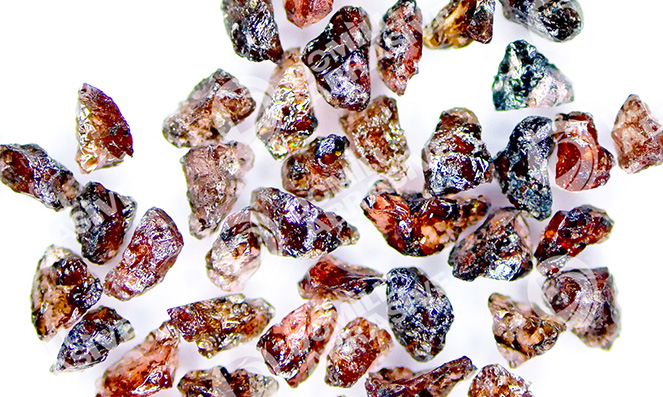
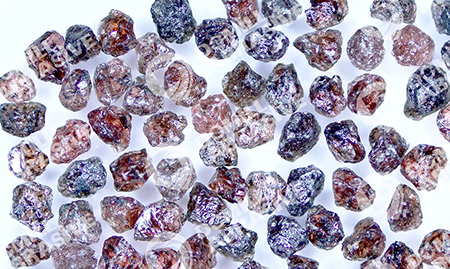
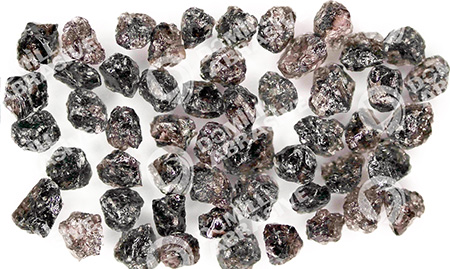
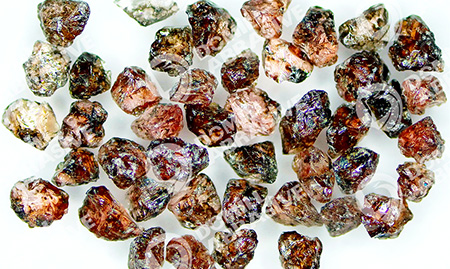
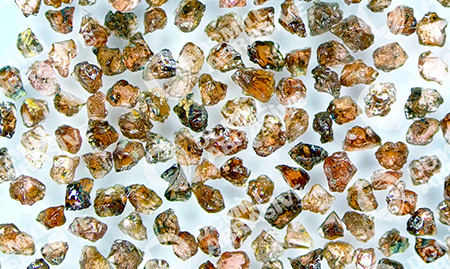
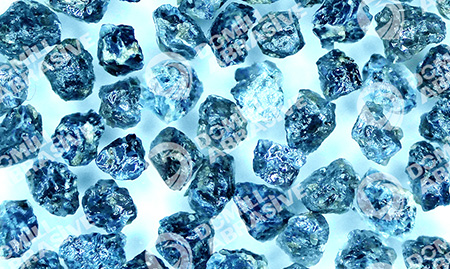
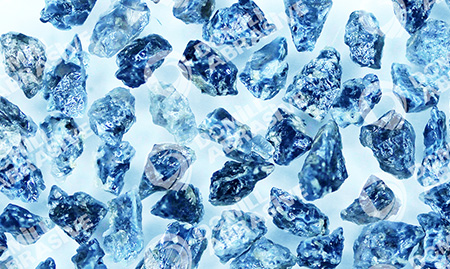
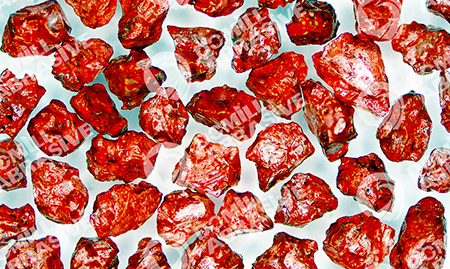
The DOMILL Standard Coated BFA (A2 Series) represents our cost-efficient, standard-grade matrix optimized for general flexible abrasive applications.
Derived from premium Fixed-Furnace macro-crystalline (slow-cooled large crystal) clinkers, this series is engineered specifically to meet the high-volume manufacturing needs of commercial sanding paper, standard cloth jumbo rolls, economy open-mesh systems, and three-dimensional non-woven matrices.
While maintaining strict compliance with standard chemical limits, the A2 series focuses its processing core heavily on post-crushing shape rectification and aspect ratio control. The processing lines concurrently deliver two distinct tracks: A22 (Standard Sharp Track via roll crushing) and A25 (Standard Reshaped Track via mechanical impacting). Fully calibrated for P-series grit ranges (FEPA P12 - P220), this grade ensures highly predictable Electrostatic Responsiveness (ESR) and secure mechanical interlocking with modern bonding agents during high-speed, continuous coating runs.
In modern automated composite coating, high-speed electrostatic planting, and non-woven fiber latex impregnation, erratic grain geometries or rogue surface micro-fines are often the root causes of coating anomalies and finished product performance fluctuations. The DOMILL A2 series addresses these processing instabilities through systematic morphological grading:
Weak Electrostatic Response & Grain Flattening: Stabilizes unmanaged aspect ratio (L/W ratio) variations. This prevents elongated or overly flat grains with uneven polarization domains from tumbling erratically or laying flat under high-voltage fields, securing high vertical alignment to maximize initial cutting sharpness.
Rogue Scratches from Brittle Needle-like Grains: Screens out brittle, thin, and excessively long acicular particles often generated during primary crushing. This prevents sudden lateral snapping under grinding shear, eliminating irregular deep scratch defects on workpieces.
Make-Coat Delamination from Micro-Fines Adherence: Thoroughly eradicates loose micro-fines adhering to the crystal surfaces, removing the "masking effect" that isolates the phenolic make-coat or non-woven latex binders. This ensures complete chemical wet-out and mechanical anchoring, minimizing premature shedding during slitting and flexibilization.
Product Specifications (Technical Context & English Table): Standard flexible coated abrasives strictly adopt FEPA P-series grading standards (P12 - P220). Fine grits beyond P220 belong to the A8 Micro-Powder Matrix. A22 emphasizes sharp cleavage edges & lower density for high ESR, whereas A25 emphasizes high sphericity & higher density for resin anchoring.
| Category / Property | A2 Standard Spec | Technical Context & Guidance |
|---|---|---|
| Al₂O₃ Content | 94.50%−95.50% | Fixed-furnace macro-crystalline stock ensuring standard edge rigidity. |
| TiO₂ Content | 2.50%−3.20% | Provides solid-solution toughness for balanced grain breakdown and self-sharpening. |
| Fe₂O₃ Content | <0.22% | Low iron residue prevents charge leaks and rust staining on workpieces. |
| SiO₂ Content | <0.80% | Limits glassy phase inclusions to maintain crystal structural integrity. |
| A22 Loose Pack Density | 1.70−1.76 g/cm³ | Roll-crushed sharp track; lower density optimizing ESR flight dynamics. |
| A25 Loose Pack Density | 1.77−1.83 g/cm³ | Mechanically reshaped track; higher sphericity maximizing resin anchorage. |
| Available Sizes | FEPA P12 - P220 | Primary macro flexible spectrum. Grits finer than P220 transition to A8 Series. |
| Grading Standard | FEPA Standard 43 / GB/T 9258 | Strict alignment with international flexible coated abrasive standards. |
A22 Track: Optimized Electrostatic Responsiveness: Sustains the sharp cleavage edges and lower bulk density inherent to slow-cooled macro-crystalline block clinkers. When passing through high-voltage fields, particles align dynamically along the electrical lines of force, ensuring superior vertical orientation in open-mesh net and standard cloth backings to deliver high initial cutting rates under low working pressures.
A25 Track: Standard Mechanically Reshaped Grade: Processed via multi-stage high-speed mechanical impact to blunt fragile microscopic slivers and sharp corners, substantially improving grain sphericity and bulk density consistency. This structural reinforcement delivers predictable performance and limits batch-to-batch variations for high-volume export contracts.
Well-Balanced Cost-to-Performance Framework: Secures a stable cost base for conversion operations while maintaining full compliance with standard flexible regulations. The highly standardized physical-chemical profile enables production engineers to lock in and run resin formulations long-term without frequent batch adjustments.
1. Commercial Cloth-Backed Jumbo Rolls: Extensively used in high-volume production for standard carbon steel sanding cloth and general deburring belts, providing predictable material removal within competitive cost constraints.
2. General-Purpose Paper Backings & Hand-Sanding Rolls: Frequently deployed in the manufacturing of commercial woodworking paper and DIY dry sanding sheets for construction wall finishing, balancing production economics with rapid inventory turnover.
3. Abrasive Cloth for Flap Discs & Wheels: Specifically configured for production lines converting cloth rolls into standard-load flap discs. The excellent surface cleanliness of the A25 reshaped track guarantees consistent wet-out with phenolic adhesive.
4. Industrial Non-Woven Abrasives & Scouring Pads: A22 Deployment: Tailored for manual scouring pads and flexible wire-drawing flap wheels. It leverages the sharp cleavage edges of macro-crystals to deliver rapid micro-cutting responsiveness under manual low-pressure operations. A25 Deployment: Designed for standard-duty industrial nylon rolls. Reshaped blocky grains seat deeper within the latex bonding nodes of the fibrous web, reducing structural shedding under rotating centrifugal force.
5. Standard Mesh/Net Abrasives & Economy Light-Duty Fiber Discs: A22 Deployment: Engineered for open-mesh sanding nets used in drywall finishing, where the sharp profile coupled with stable ESR performance ensures grains plant vertically onto net intersections under electrostatic fields. A25 Deployment: Restricted to retail-grade, light-duty vulcanized fiber discs for everyday angle grinders, providing standard single-grain compressive resistance and baseline performance.
Essential difference from the A6 Series (material mechanics and high-performance mechanical boundaries) → For high-pressure grinding or zero-deep-scratch scenarios, please upgrade to the DOMILL A6 Series.
Boundaries: A2 Series uses slow-cooled macro-crystalline Fixed-Furnace chunks with fewer internal grain boundaries, making individual grains exceptionally sharp but prone to macro-shattering under severe impact. Conversely, the A6 Series employs rapid-cooling Tilting-Furnace methods to form a micro-crystalline, high-toughness matrix. For heavy-duty industrial vulcanized fiber discs, robotic stainless-steel belts under high grinding pressures, or automotive OEM lines where rogue deep scratches are strictly prohibited, users must opt for the high-toughness, micro-crystalline DOMILL A6 Series or its calcined variants. The A2 series is restricted to general/DIY light-duty manual applications in the fiber disc sector.
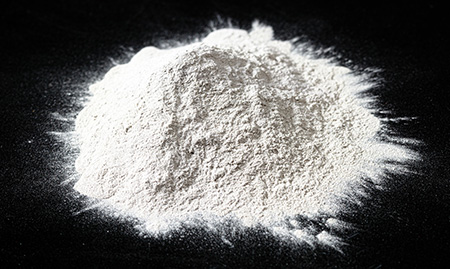
Essential difference from the A8 Series (particle size application boundaries) → For ultra-fine polishing and the micro powder range, please choose the DOMILL A8 Series.
Boundaries: The A2 Series strictly caters to macro flexible applications, capping its size spectrum at P220. For fine-grit precision grinding (e.g., P240 - P2500+ waterproof sheets, liquid polishing compounds, or electronic thermal fillers) which require precise sub-micron distributions and ultra-low free iron controls, please consult the DOMILL A8 Micro-Powder Matrix.
Q: How does the aspect ratio control of the A22 Sharp Track improve cutting efficiency on standard electrostatic planting lines?
A: Inside electrostatic coating fields, abrasive particles project upward propelled by internal polarization alignment. If grain morphology is overly flat or irregular, the polarization domains disperse unevenly, causing particles to tumble erratically and land horizontally in the make-coat. The DOMILL A22 line stabilizes the aspect ratio via post-crushing optimization, ensuring uniform Electrostatic Responsiveness (ESR). This allows the narrower tips of the crystals to align accurately with the electrical lines of force, planting vertically into the resin matrix to present the sharpest cleavage edges for grinding.
Q: How does the mechanical reshaping of the A25 grade reduce shedding issues during cloth flexibilization and slitting?
A: Generic crushing methods typically leave fragile microscopic slivers, structural micro-fractures, or adhering loose micro-fines on the grain surfaces. When converted jumbo rolls undergo intensive mechanical flexibilization or flap stamping, these weak sections snap off prematurely under shear stress, creating premature vacancies in the binder matrix that trigger localized delamination. The DOMILL A25 grade eliminates these microscopic vulnerabilities and loose dust via multi-stage physical impact shaping. The resulting high-sphericity blocky geometry permits the phenolic resin to establish a more uniform envelopment, yielding superior anchoring resistance when the flexible backing faces severe bending stresses.
Please fill out the form.We will reply you in 24 hours.