Home / Products / Blasting Media / Eco-Friendly Crushed Glass Grit
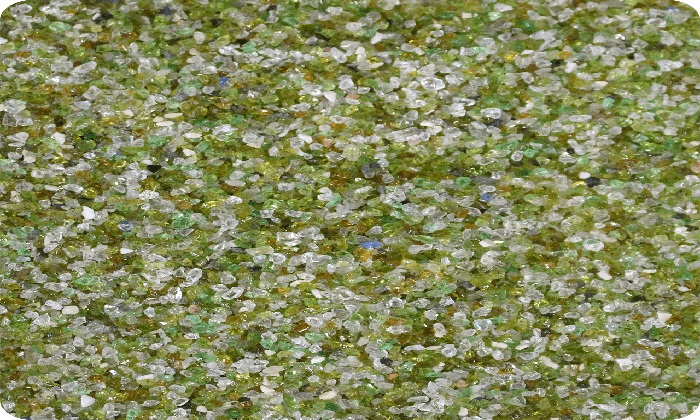
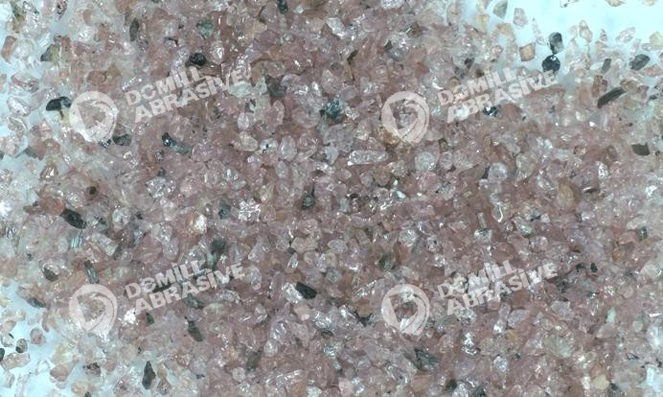
DOMILL Eco-Friendly Crushed Glass Grit is manufactured from 100% recycled amorphous plate and container glass, processed through intensive cleaning, thermal drying, mechanical crushing, and precise screening.
The resulting media consists of sharp, translucent, angular to sub-angular particles that are completely inert and chemical-free.
Engineered specifically for open-air environmental blasting and sensitive restoration sites, DOMILL Crushed Glass Grit serves as the primary non-toxic replacement for hazardous silica sand, copper slag, and coal slag. Containing <1% free crystalline silica and zero toxic heavy metals (lead, arsenic, beryllium), it fully protects blast operators from silicosis and respiratory hazards. With a Mohs hardness of 5.5–6.0, its sharp angular geometry micro-machines surface coatings without cutting into underlying sensitive substrates. It excels in log home varnish stripping, historical masonry cleaning, fiberglass boat hull gelcoat removal, and non-ferrous alloy prep.
(Note: Crushed glass grit features a Mohs hardness of 5.5–6.0 and is designed primarily as a single-pass consumable media. For heavy industrial descaling of mill scale, aggressive cutting, or enclosed blast-room 10+ recycling loops, upgrade to DOMILL Brown Fused Alumina or DOMILL White Fused Alumina (Al2O3≥99%) series.)
Silicosis Hazards & Strict Regulatory Bans on Silica Sand: Silica sand harbors massive free crystalline silica, triggering fatal silicosis diseases in blast operators. DOMILL Crushed Glass contains <1% free silica, fully complying with global OSHA/EPA occupational safety regulations.
Heavy Metal Leaching in Sensitive Field Environments: Blasting near waterways or residential zones with copper slag leaches heavy metals into surrounding ecosystems. Non-toxic, chemically inert glass grit creates zero environmental contamination.
Substrate Gouging on Soft & Delicate Materials: Hard abrasives like steel grit or alumina gouge soft log wood, historic brickwork, and composite fiberglass. Gentle 5.5–6.0 Mohs glass grit strips coatings smoothly without gouging substrate integrity.
3.1 Physical & Chemical Specifications Table
|
Classification |
Property / Element |
Control Specification / Typical Value |
Technical Context & Guidance |
|
Physical Spec |
Particle Shape |
Crushed Sharp Angular |
Sharp facets deliver efficient, low-impact stripping |
|
|
Free Crystalline Silica |
<1.0% (Typical <0.1% Amorphous) |
Zero silicosis health risk; direct safe replacement for quartz sand |
|
|
Specific Gravity |
2.4–2.5 g/cm3 |
Moderate mass ensuring stable pneumatic acceleration and low dust |
|
|
Bulk Density |
1.3–1.4 g/cm3 |
Calibrated for portable outdoor pressure pot dosing valves |
|
|
Mohs Hardness |
5.5 – 6.0 Mohs |
Medium hardness that strips paint without gouging soft substrates |
|
|
Heavy Metal Leaching |
Zero Lead, Arsenic, Beryllium |
Passes EPA TCLP limits; 100% non-toxic for environmental sites |
|
Chemical Analysis |
SiO2 |
70.00% – 75.00% |
Amorphous bound silicate glass matrix; safe for human contact |
|
|
Na2O |
12.00% – 15.00% |
Soda-lime glass matrix network element |
|
|
CaO |
7.00% – 11.00% |
Structural oxide enhancing grain stability |
|
|
MgO |
2.00% – 5.00% |
Lattice stabilization element |
|
|
Al2O3 |
0.50% – 2.50% |
Trace element providing particle integrity |
|
Grade / Mesh Size |
Particle Size (mm) |
Primary Application |
Surface Finish & Operational Benefit |
|
Coarse 20/40 Mesh |
0.425 – 0.85 mm |
Heavy log home varnish stripping, thick graffiti removal |
Maximum stripping momentum for thick polyurethane topcoats |
|
Medium 40/80 Mesh |
0.18 – 0.425 mm |
Standard Workhorse Grade; light rust & steel prep |
Industry standard size; ideal balance of speed and profile |
|
Fine 70/100 Mesh |
0.15 – 0.212 mm |
Fiberglass boat hull gelcoat stripping, auto body panels |
Creates a uniform light anchor pattern without tearing fiberglass |
|
Fine Powder 100/200 |
0.075 – 0.15 mm |
Historic stone carving restoration, aluminum deburring |
Ultra-gentle cleaning; protects intricate architectural details |
6.1 Commercial Selection & Generational Upgrade Matrix
|
Operating Condition & Application |
Recommended Abrasive |
Selection Rationale & Upgrade Benefit |
Cost & Efficiency Impact |
|
Open-Air Environmental Blasting / Log & Masonry Prep |
DOMILL Crushed Glass Grit |
Non-Toxic Eco-Media; free silica <1%, protects soft wood/masonry, low upfront bulk cost |
Lowest initial purchase price for non-recoverable field projects |
|
Industrial Steel Heavy Mill Scale Descaling / Blast Room |
Upgrade to DOMILL Brown Fused Alumina (BFA) |
Hardness Jump (Mohs 9.0 vs 6.0); aggressive cutting; extreme toughness yields 10–15+ reuses |
Doubles descaling speeds; drastically lowers long-term cost per square meter |
|
Non-Ferrous Precision Deburring & Zero Contamination |
Upgrade to DOMILL White Fused Alumina (WFA) |
Purity & Hardness Jump (Al2O3≥99%); Mohs 9.0 cutting power, 100% Iron-Free, long recycle life |
Essential for stainless steel and aluminum substrate high-efficiency processing |
Operating Condition 1: Field Open Blasting, Log Home Paint Stripping, Historic Masonry, and Fiberglass Hulls $\rightarrow$ Select DOMILL Eco-Friendly Crushed Glass
Ideal for field non-recoverable projects and delicate substrates (wood, brick, fiberglass). Guarantees operator safety (zero free silica) and prevents substrate gouging.
Operating Condition 2: Heavy Mill Scale Stripping on Industrial Steel Structures & Closed-Loop Blast Rooms (10+ Recycling Cycles) $\rightarrow$ Upgrade to [DOMILL Brown Fused Alumina]
Crushed glass (Mohs 5.5–6.0) breaks down into dust upon striking tough mill scale. For enclosed blast rooms, upgrade to DOMILL Brown Fused Alumina (Mohs 9.0) to double descaling speeds and achieve 10–15+ recycling passes, lowering long-term operational costs significantly.
Operating Condition 3: High-Efficiency Cutting and Deburring of Aluminum, Stainless Steel, and Titanium Alloy Parts $\rightarrow$ Upgrade to [DOMILL White Fused Alumina]
Crushed glass lacks the hardness needed to shear tough metal burrs efficiently. Upgrade to DOMILL White Fused Alumina (Al2O3≥99%, Mohs 9.0) for fast, iron-free precision deburring and extended recycling durability.
1. Log Home & Masonry Restoration: Widely utilized for log home stain removal and historic masonry cleaning without gouging wood fibers or destroying stone carvings.
2. Fiberglass Hulls Marine Fiberglass Hull Prep: Strips aged antifouling coatings and marine growth from fiberglass boat hulls without damaging delicate fiberglass gelcoats.
3. Field Environmental Blasting: Provides non-toxic, silica-free field surface preparation on bridge steelwork, field pipe joints, and aluminum structures.
Q: Why is Crushed Glass Grit considered the ideal safe replacement for hazardous Silica Sand?
A: Silica sand contains massive amounts of free crystalline silica that trigger fatal, irreversible silicosis diseases in blast operators. DOMILL Crushed Glass is made from amorphous soda-lime glass, containing <1% free crystalline silica and zero heavy metals. It delivers aggressive angular cutting without occupational safety liabilities.
Q: What are the main limitations of Crushed Glass Grit compared to Brown Fused Alumina in steel blast rooms?
A: Crushed glass exhibits clear performance physical caps when descaling heavy steel in enclosed recovery blast rooms:
1. Lower Hardness & Speed: Glass grit has a Mohs hardness of 5.5–6.0 compared to BFA’s Mohs 9.0. It strips tough mill scale much slower;
2. High Friability & Low Reusability: Glass shatters into dust after 1–2 impacts, creating high dust volume. DOMILL BFA features extreme toughness, yielding 10–15+ recycling passes;
3. Shallow Anchor Pattern: Glass creates a shallower profile, whereas BFA etches deep, sharp keyways that maximize heavy paint adhesion.
Please fill out the form.We will reply you in 24 hours.