Home / Products / Silicon Carbide / Black Silicon Carbide
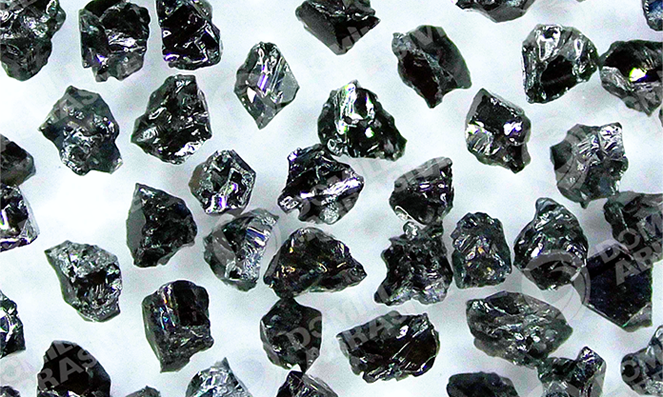
DOMILL Black Silicon Carbide (designated as C) is synthesized via the Acheson electric resistance furnace process by chemically reacting high-purity petroleum coke and quartz sand at high temperatures ranging from 1700 °C to 2500 °C.
The dominant crystal phase is α-SiC with hexagonal or rhombohedral structures, containing approximately 98% SiC.
Physically, Black SiC's hardness sits between fused alumina and synthetic diamond, with mechanical intensity superior to that of fused alumina. It features low specific density, exceptional wear resistance, outstanding chemical inertness even at elevated temperatures, high thermal conductivity, low thermal expansion, and excellent thermal shock resistance. Within the DOMILL product architecture, Black SiC is categorized into two specialized grades: C18 engineered for organic/vitrified bonded grinding tools and high-pressure blasting, and C25 tailored for coated abrasive belts/papers and non-woven abrasive manufacturing.
| Grade Code | Primary Target | Grain Standards | Key Physical & Morphological Traits |
|---|---|---|---|
| C18 | Bonded Abrasives & Pressure Blasting | FEPA F (F12–F1200), JIS (60#–3000#), ISO / ANSI / GOST | High mechanical intensity and isometric grain shape; built for heavy-duty vitrified/resinoid grinding wheels and impact pressure blasting. |
| C25 | Coated & Non-Woven Abrasives | FEPA P (P12–P2500), JIS / ANSI / GOST / Customer customization | High aspect ratio with razor-sharp edges; shape-optimized for electrostatic deposition, providing maximum grain anchorage in belts, sheets, and non-woven wheels. |
1. Superior Hardness & Mechanical Intensity: Hardness directly surpasses fused alumina, while mechanical intensity exceeds aluminum oxide. It maintains structural integrity under impact, rapidly shearing hard or brittle substrates with reduced normal pressure.
2. Low Density & Exceptional Thermal Shock Resistance: Combines low specific density with high thermal conductivity and low thermal expansion to quickly dissipate heat during high-speed grinding and blasting, preventing localized workpiece burns.
3. Outstanding High-Temperature Chemical Inertness: Retains excellent chemical inertness and wear resistance at elevated temperatures, resisting chemical reactivity or workpiece loading for prolonged tool lifespans.
4. Global Standard Compliance (ISO/FEPA/ANSI/JIS/GOST): Strictly classified under FEPA, ISO, JIS, ANSI, and GOST protocols to ensure a concentrated particle size distribution without scratch-inducing oversize grains.
DOMILL Black SiC Architecture
├── C18 Grade (Bonded Abrasives & Pressure Blasting)
│ ├── Resinoid/Vitrified Wheels for Cast Iron, Non-Ferrous Metals, Glass, Stone, Rubber & Wood
│ └── Industrial Pressure Blasting, Rust Removal, Deburring, Surface Roughing & Anti-Skid
└── C25 Grade (Coated & Non-Woven Abrasives)
├── Premium Coated Abrasives: Waterproof Paper, Stone/Woodwork Sanding Belts
└── Non-Woven Abrasives & Flap Discs
1. Bonded Abrasives — C18
Cast Iron & Non-Ferrous Grinding Wheels:Formulated into resinoid and vitrified grinding wheels to efficiently process grey iron, ductile iron, brass, aluminum, and other non-ferrous metals.
Hard & Brittle Non-Metallic Grinding: Extensively utilized for stone sawing and grinding wheels, glass edge profiling, technical ceramics, rubber, and woodworking tools.
2. Coated & Non-Woven Abrasives — C25
Premium Sandpaper & Heavy-Duty Sanding Belts: Provides razor-sharp, vertically oriented grain deposition in waterproof sandpaper, woodworking belts, and stone wet-grinding discs for rapid cut rates.
Non-Woven Abrasives & Anti-Skid Aggregates: Utilized in industrial non-woven polishing wheels, flap discs, and high-wear-resistant aggregates for anti-skid floor coatings.
3. Pressure Blasting — C18
Heavy-Duty Surface Blasting & Roughing: Engineered for high-pressure blasting systems to deburr castings, remove mill scale, etch glass patterns, and create anchor profiles with superior media recyclability.
| Property | Typical Value |
|---|---|
| Crystal Phase | α-SiC (Hexagonal / Rhombohedral) |
| SiC Content | ≈ 98.0% |
| Synthesis Process | Acheson Process (1700 °C–2500 °C) |
| Mohs Hardness | 9.2–9.5 (Between Fused Alumina & Diamond) |
| Mechanical Intensity | Superior to Fused Alumina |
| Density Trait | Low Specific Density |
| Standards | FEPA (F/P), JIS, ISO, ANSI, GOST |
Q: What is the specific manufacturing difference between DOMILL C18 and C25 grades?
A: While both maintain ~98% SiC purity, they are differentiated by grain shape morphology and sizing calibration:
C18 (Bonded & Pressure Blasting): Features high mechanical intensity and an isometric shape. Optimized for high bulk density and impact resistance under wheel pressing and pressure blasting conditions.
C25 (Coated & Non-Woven): Shape-tailored for high sharp-edge proportions. During electrostatic coating, C25 grains orient vertically with cutting points facing outward, enhancing resin keying and cutting aggression on belts and non-woven products.
Q: What are the primary performance advantages of Black SiC over Fused Alumina when grinding brittle materials?
A: Black SiC possesses higher hardness and superior mechanical intensity compared to fused alumina. When machining grey iron, ceramics, glass, or stone, alumina abrasives glaze over quickly. Black SiC cuts directly into hard/brittle matrices with minimum resistance, while its low density and high thermal conductivity prevent thermal surface cracking.
Please fill out the form.We will reply you in 24 hours.